Before a jewelry collection launch moves into production, it should be able to answer more than “Do we like the design?” It should know who the collection is for, what each product must achieve, how it will be priced, how it will be made, and how it will reach the customer.
A new collection often begins with a strong creative idea, a trend, customer feedback, a retail opportunity, or a seasonal deadline. But design approval alone does not establish whether a collection can be produced consistently, priced appropriately, sourced responsibly, or delivered through the brand’s intended channels.
The biggest pre-launch risk is committing to production before the commercial and operational questions have been answered. This article is a readiness checklist—not a full manufacturing-process explainer. For readers who want the deeper technical walkthrough after completing this checklist, see MJJ’s Ultimate Custom Jewelry Manufacturing Guide.
1. Who Is This Collection For—and Why Will They Buy It?
Which customer, occasion, and unmet need is this collection designed to serve?
Define a primary customer rather than designing for every audience at once. Identify the role of the collection: a new-customer entry point, everyday jewelry, gifting, bridal or milestone purchases, fashion-forward statement pieces, a new price tier, or a retailer-specific opportunity.
Encourage teams to use evidence, not instinct alone: existing product sell-through, customer requests, e-commerce site-search behavior, sales-team feedback, return reasons, and retail buyer input. The collection should solve a clear commercial problem, not just add more SKUs.
2. Does Every SKU Have a Clear Role in the Assortment?
What is each piece supposed to do for the customer and for the business?
An assortment should be deliberately structured, not simply assembled from designs the team likes. Use a simple product-role framework:
| Product role | Purpose |
| Anchor or hero piece | Defines the collection’s design point of view and creates attention |
| Entry piece | Introduces new customers to the brand at an accessible level |
| Everyday core | Supports repeat wear, gifting, and dependable sales volume |
| Signature piece | Builds differentiation and stronger average order value |
| Statement piece | Creates editorial, social, and visual impact |
| Add-on piece | Supports layering, bundling, or multiple-item purchases |
Check whether there are too many styles competing at the same price point, whether there is an intentional relationship between hero pieces and more accessible items, whether components or design systems can be standardized to simplify sourcing and production, and whether the collection has a focused story that a customer or retailer can understand quickly.

3. Does the Price Architecture Work Before Production Begins?
Does the collection offer a deliberate progression of value, and can the target retail prices support the full product cost?
Establish entry, core, elevated, and premium price points before finalizing the range. Review the full commercial picture—not merely the metal or stone cost: materials, stone-setting and manufacturing complexity, sampling and any applicable development requirements, finishing, plating, packaging, and certification needs, wholesale margin requirements if applicable, and fulfillment, shipping, returns, and customer-service considerations.
A design may look commercially viable until the complete production specification is defined. Identify early whether a product is a margin builder, an entry product, a brand-building statement, or a retail-specific SKU.
4. Is the Design Ready for Manufacturing Review?
Can the design be produced reliably at the intended quality, price position, and volume?
Before a sample is commissioned, confirm the key production requirements: metal type, color, karat, and finish; stone shapes, sizes, quality range, and setting requirements; target dimensions, product weight, comfort, and wearability; clasp, chain, engraving, moving-part, or sizing needs; and any fragile areas or complex construction details.
A manufacturing review can identify potential issues before money is committed to extensive development or production. CAD/CAM and technical feedback are tools for clarifying manufacturability—not a substitute for strategic product decisions.

5. What Must the Physical Sample Prove?
What evidence does the brand need before approving this item for production?
A digital render may help communicate design intent, but a physical sample allows the brand to assess the actual product standard. Use a sample-approval checklist:
- Does the piece match the intended dimensions, scale, proportions, and silhouette?
- Is the weight appropriate for wearability, perceived quality, and the target product position?
- Are metal color, polish, plating, texture, engraving, and logo details correct?
- Are stones correct in size, shape, placement, matching, and security?
- Are prongs, bezels, pavé, channels, clasps, hinges, or moving parts functioning as intended?
- Is the piece comfortable to wear and sufficiently durable for its intended use?
- Does branded packaging protect and present the item correctly?
- Can the approved sample become a documented benchmark for repeat production?
Samples are a decision gate—not a formality.
6. Are Materials and Sourcing Requirements Fully Defined?
Can the collection’s metals, stones, components, and responsible-sourcing requirements be specified and supported consistently?
Define material requirements before the production commitment: metal type, karat, color, alloy, finish, and plating; diamonds and gemstones by type, shape, calibrated size, quality range, and matching needs; chains, clasps, findings, and bespoke components. Consider whether specialty stones, unusual cuts, or material combinations introduce sourcing complexity.
Ask what documentation is available to support retail buyers, customer questions, or brand sourcing claims.
If production involves cross-border manufacturing, ask where the goods will be made, whether product-specific origin rules such as USMCA may apply, and how duties and landed cost will be affected for your specific program. Understand how USMCA qualification may apply to Mexico-based jewelry production.
Brilliant Jewelers / MJJ Inc. is listed in the Responsible Jewellery Council member directory; brands should confirm the current certification status and scope during supplier due diligence. Responsible Jewelry Council
7. Is the Production Plan Aligned With Real Demand?
Which products need inventory before launch, and which should be tested or replenished more flexibly?
Group SKUs by demand confidence: proven extensions of existing bestsellers, core products supported by known customer demand, and new products with uncertain demand.
Ask a manufacturing partner what the production requirements are for this specific product, whether you can begin with samples or a controlled test order, whether no minimum order quantities are available for this product and program, which materials, components, packaging requirements, or processes may affect order structure, and how you should plan reorders if the product performs well.
Ask whether no-MOQ production is available for your specific product and program, and what conditions apply. This should be treated as an evaluation criterion for your particular program, not a universal industry assumption. No MOQ: How Flexible Jewelry Manufacturing Helps Growing Brands Scale.
8. Is the Collection Ready to Be Sold and Delivered?
Have we planned the customer or retail experience after manufacturing is complete?
Confirm product information required for e-commerce and wholesale: accurate product names, descriptions, dimensions, metal details, stone specifications, and care guidance; ring-size or fit information; product photography, on-body imagery, detail shots, and visual consistency.
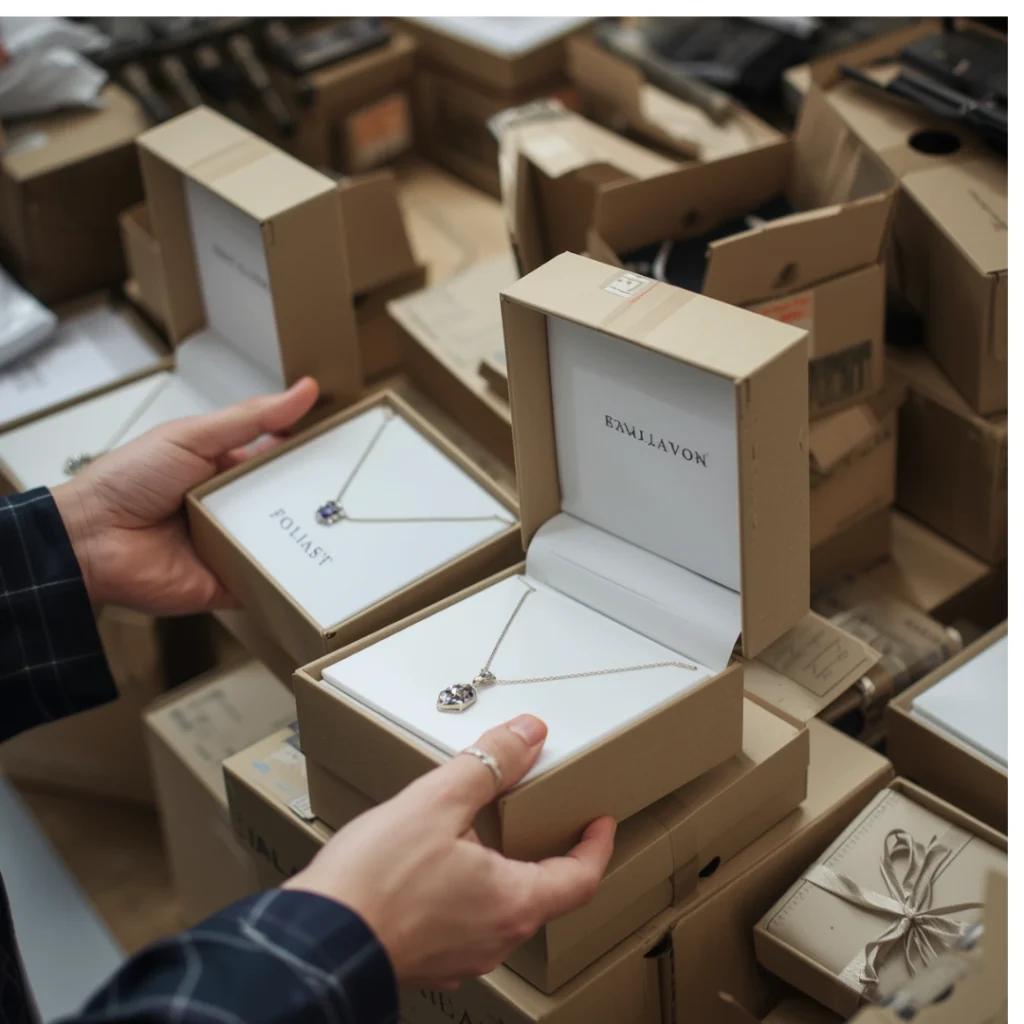
Define branded packaging requirements: boxes, pouches, certificates, care cards, gift notes, and presentation inserts.
Consider the operational model: inventory storage, final quality checks, SKU-level accuracy, direct-to-consumer shipping, wholesale account packaging, labeling, and routing, returns, repair, and restocking process, and dropshipping or made-to-order fulfillment where appropriate.
Brands should confirm exactly which functions a prospective partner supports and how handoffs are managed. Guide to Jewelry Fulfillment, Dropshipping, and Distribution
Jewelry Collection Launch FAQ
What should be included in a jewelry collection launch plan?
A collection launch plan should cover the target customer, assortment strategy, price architecture, approved product specifications, material sourcing, production plan, branded packaging, sales channels, and fulfillment process.
How many jewelry samples should a brand approve before production?
The appropriate sampling process depends on product complexity, technical requirements, material choices, and the manufacturing program. Brands should at minimum establish a clear approval benchmark before wider production begins.
Can a jewelry manufacturer help with fulfillment after production?
Some manufacturers may also support inventory coordination, branded packaging, direct-to-consumer fulfillment, dropshipping, wholesale preparation, or distribution. Brands should confirm the exact services, responsibilities, and handoff process before launch.
Launch With Answers, Not Assumptions
The pre-launch process is designed to protect creative intent and commercial viability before production begins. Use this decision checklist: customer and collection role, SKU structure, price architecture, manufacturing readiness, sample approval, material sourcing and responsible-practice questions, production planning, and packaging, fulfillment, and retail readiness.
Talk to MJJ about planning your next jewelry collection. We’ll be happy to guide you every step of the way.
Share your design direction, target customer, material requirements, product mix, sales channels, and launch objectives by filling out the form below—and our team can help you evaluate a practical production path before you commit to anything.
Contact