A gold jewelry finish does more than determine how a piece looks. It influences how light reflects from the surface, how fine scratches appear, and how a design needs to be specified for gold jewelry production.
For brands developing solid-gold collections, choosing the right finish means balancing visual identity with practical considerations such as wear, repeatability, and production requirements.
MJJ Brilliant’s standard finishing options include high polish, satin/brushed, matte, sandblasted, and tumble finishes.
Decorative textures such as hammered, Florentine, and ice should be discussed with MJJ for each design. Explore MJJ’s guide to custom jewelry manufacturing for a broader look at production capabilities.
What Jewelry Brands Should Consider Before Choosing a Gold Finish
Before selecting a finish, consider four factors:
- Appearance: Mirror polish creates sharp reflections, while matte, satin, and textured surfaces diffuse light. The choice affects the look and feel of the entire collection.
- Wear: Fine scratches tend to show more clearly on mirror-polished surfaces than on satin, matte, or many textured finishes. However, texture can gradually wear smooth on high-contact areas, such as the palm side of a ring.
- Production: The shape of the piece, surface area, level of detail, and consistency required across multiple units can affect how a finish is applied and maintained.
- Specification: A finish name alone may not communicate the exact result you want. Reference images, defined texture direction, sample approval, and clear notes in the technical pack help align expectations.
And of course, gold karat matters, too. 18K gold contains more gold than 10K gold, but hardness and wear depend on the full alloy composition, design, and construction—not karat alone. A finish changes the surface appearance; it does not change the gold alloy’s karat fineness.
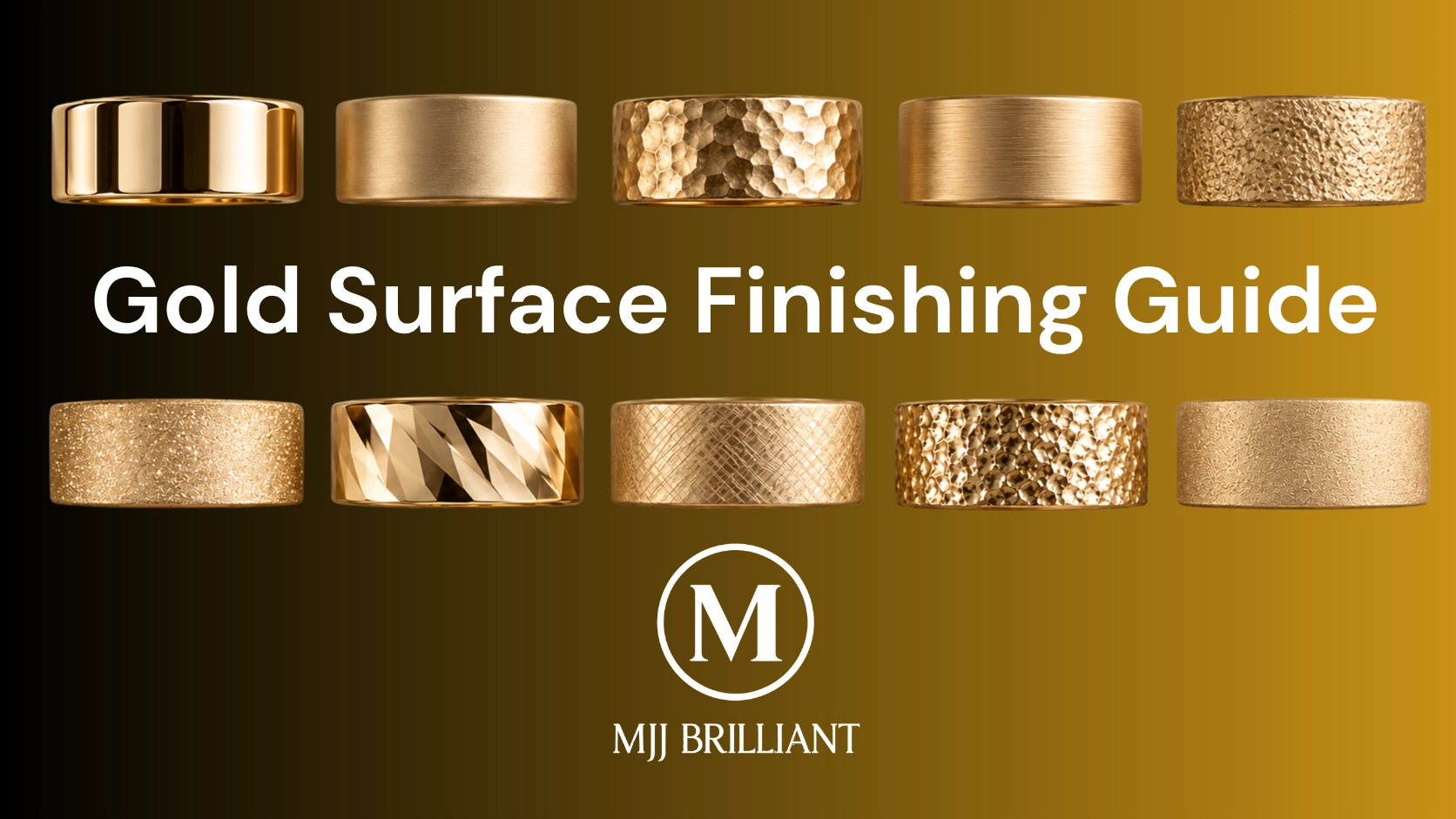
10 Gold Jewelry Finishes Compared
The table below offers a quick comparison of each finish’s appearance, scratch visibility, and typical applications. Scratch visibility is relative: actual results depend on the alloy, design, depth of the finish, and how the jewelry is worn.
| Finish | Look | Scratch visibility | Best for |
| High polish | Smooth, mirror-like shine | High; fine scratches can stand out | Bridal, classic jewelry, reflective statement pieces |
| Matte | Low-reflection, subdued surface | Generally lower than mirror polish | Minimalist designs, contemporary collections |
| Hammered | Irregular, hand-worked facets | Often less noticeable across the textured surface | Organic, artisanal, statement jewelry |
| Satin or brushed | Soft sheen with directional lines | Generally lower than mirror polish | Everyday styles, modern bands, understated designs |
| Stone finish | Textured, irregular surface | Often less noticeable, depending on texture | Rustic or organic design concepts |
| Diamond dusting | Fine, light-catching surface effect | Often less noticeable than mirror polish | Subtle sparkle without a conventional mirror finish |
| Diamond cut | Crisp facets and sharp flashes of light | Varies with facet size and placement | Geometric details, edges, decorative accents |
| Florentine | Repeated crosshatched or engraved lines | Pattern can help disguise fine marks | Decorative panels, signets, classic motifs |
| Ice texture | Uneven, crystalline-looking surface | Often less noticeable across the texture | Bold, sculptural, high-contrast designs |
| Sandblasted/frosted | Fine-grained, diffuse surface | Generally lower than mirror polish, but can show wear | Modern, understated designs and contrast details |
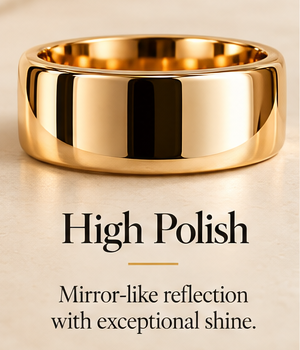
1. High Polish
Appearance: High polish creates a smooth, reflective surface with a mirror-like shine. It emphasizes clean contours, bright highlights, and the piece’s silhouette.
Wear considerations: Fine scratches and scuffs are generally more visible on high-polish surfaces, especially on rings and bracelets that regularly contact hard objects.
Production considerations: The desired level of reflection matters. A mirror finish requires a smooth surface, so visible marks and inconsistencies can be particularly noticeable.
How to specify it: State whether you want a mirror-like finish across the entire piece or only on selected surfaces. Reference photographs can help distinguish a bright polish from a softer shine.
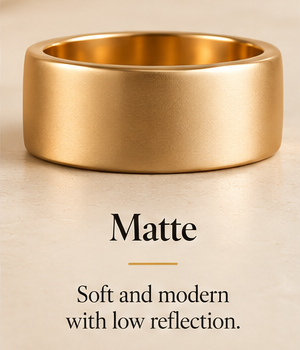
2. Matte
Appearance: Matte gold has a subdued, low-reflection surface. It creates a restrained, contemporary look and can contrast effectively with polished edges or stone settings.
Wear considerations: Fine scratches are often less conspicuous than on mirror polish. Depending on the method and use, however, a matte surface can become shinier in areas exposed to repeated friction.
Production considerations: Consistency matters across broad surfaces and matching pieces. Specify whether the matte appearance should be uniform or intentionally contrasted with other finishes.
How to specify it: Identify the surfaces to be finished and provide a visual reference for the desired level of reflectivity.
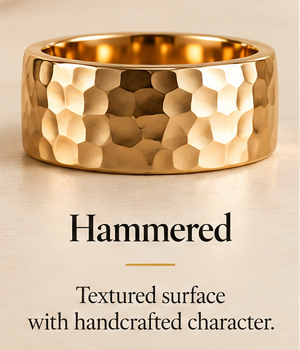
3. Hammered
Appearance: Hammered gold features small indentations and facets that create an irregular, hand-worked appearance. The pattern can be subtle or pronounced.
Wear considerations: The uneven surface can make small marks less obvious, although raised areas may experience friction and gradually change in appearance.
Production considerations: The size, depth, and distribution of the indentations determine whether the result looks delicate or heavily textured.
How to specify it: Include a reference image and describe the desired texture scale, depth, and coverage.
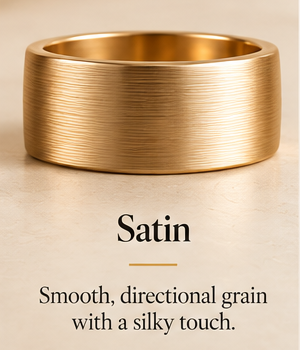
4. Satin or Brushed
Appearance: Satin and brushed finishes produce a soft sheen rather than a mirror reflection. Brushed surfaces commonly show fine lines in a particular direction, while satin is often used to describe a more uniform, subdued sheen.
Wear considerations: These finishes generally hide fine scratches better than mirror polish. On frequently handled areas, such as the underside of a ring, the directional texture can gradually wear down or become shinier.
Production considerations: Line direction and consistency are important, particularly on matching products or surfaces that meet at different angles.
How to specify it: State whether the finish should be directional or uniform. For brushed surfaces, mark the desired grain direction on the technical drawing or surface map.
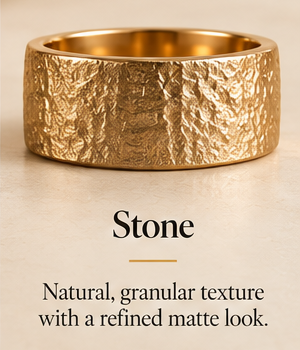
5. Stone Finish
Appearance: The term can describe a textured, irregular surface with an organic or lightly distressed look. Its exact appearance depends on the technique and reference being used.
Wear considerations: An irregular surface may disguise some small marks, but raised areas can smooth with contact over time.
Production considerations: Because “stone finish” can refer to different looks or processes, the reference image is especially important.
How to specify it: Describe the visual result rather than relying on the name alone. Confirm the intended terminology and manufacturing approach with us.
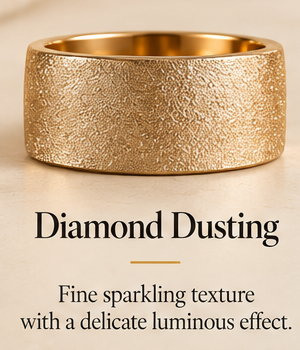
6. Diamond Dusting
Appearance: Diamond dusting gets its name from the fine, sparkling effect created when a diamond-tipped tool cuts tiny facets into the gold surface. These facets catch and reflect light, producing a delicate, shimmering texture.
Wear considerations: The fine facets may help make minor surface marks less noticeable than on mirror-polished gold. However, repeated friction can soften the texture and reduce its original sparkle over time.
Production considerations: The size, density, and coverage of the tiny facets influence the final appearance. A close-up reference helps communicate the desired level of sparkle.
How to specify it: Provide a visual reference, identify the surfaces to be treated, and confirm the intended technique with our production team for the specific design. Do not assume the term means diamonds are physically set into the piece.
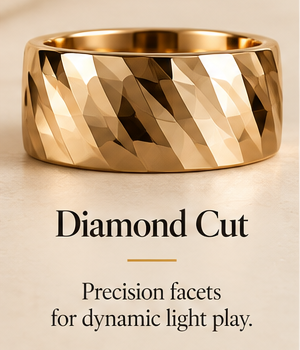
7. Diamond Cut
Appearance: Diamond-cut surfaces feature crisp facets that catch and reflect light, creating a decorative sparkle. The name commonly refers to cuts made with diamond-tipped tools, which create defined facets in the metal.
Wear considerations: Small facets and edges can change with friction or impact. Scratch visibility depends on the facet pattern and the surrounding finish.
Production considerations: The size, angle, spacing, and placement of the cuts affect the final look, so reference details are useful.
How to specify it: Mark the intended cut areas and provide a close-up reference. Confirm the method and feasibility of the design with us.
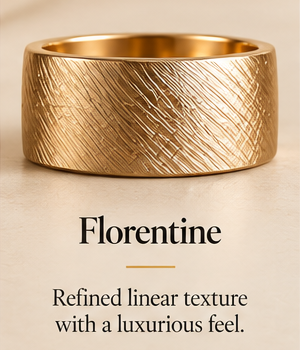
8. Florentine
Appearance: A Florentine finish typically features repeated engraved lines in a crosshatched or woven-looking pattern. It adds detail without relying on a mirror shine.
Wear considerations: The pattern may make fine surface marks less prominent, but repeated contact can soften the definition of the lines.
Production considerations: Pattern scale and consistency determine how the finish reads across a flat panel, curved surface, or small decorative element.
How to specify it: Identify the areas to be patterned and supply a reference that shows the line density and direction.
9. Ice Texture
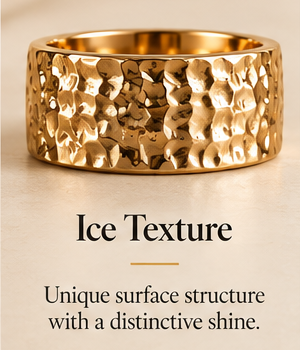
Appearance: Ice texture describes a rough, irregular surface intended to resemble crystalline or fractured ice. It can create a bold contrast with smooth metal surfaces.
Wear considerations: The texture may reduce the visibility of some fine scratches, but high-contact areas can gradually lose definition.
Production considerations: The intended texture needs to be clearly defined; the name alone does not guarantee a uniform result across manufacturers.
How to specify it: Provide a close-up reference, identify the desired level of texture, and confirm the terminology and feasibility.
10. Sandblasted or Frosted
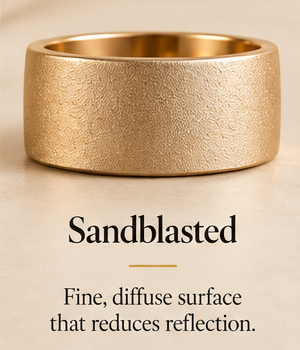
Appearance: Sandblasting creates a fine, diffuse surface that reduces reflection. “Frosted” is often used to describe the resulting appearance, although it does not necessarily identify a particular manufacturing process.
Wear considerations: Sandblasted surfaces generally hide fine scratches better than mirror polish. However, friction can smooth the texture and make high-contact areas look shinier over time.
Production considerations: The desired grain, coverage, and contrast with polished areas should be established before production.
How to specify it: Identify the surfaces to be sandblasted and any areas that should remain polished. If “frosted” is the preferred visual description, include a reference image and confirm the intended treatment.
Where Tumble Finishing Fits
Tumble finishing is another option we can offer, particularly for volume work. It can produce a softer, more uniform luster than a hand-finished mirror polish.
The result depends on the part, media, and process, so brands should approve a sample when the exact appearance matters.
How Gold Karat and Alloy Composition Affect Finish Selection
Karat fineness describes the proportion of pure gold in an alloy; it does not determine the surface finish. By weight, the gold content is approximately:
- 10K gold: 41.7% gold
- 14K gold: 58.3% gold
- 18K gold: 75% gold
The remaining proportion consists of other metals that help form the alloy and influence its color and physical properties.
Two alloys of the same karat can behave differently depending on their composition, so it is not accurate to assume that every 18K alloy is softer, or every 10K alloy harder, in every application.
When developing a collection, consider the desired color, finish, design geometry, and expected use together.
See MJJ’s article on direct sourcing, cost control, and provenance for its available karat, alloy, and color options.
Also distinguish solid gold from plated products. A surface finish describes the texture or reflectivity of the metal; plating adds a layer of another metal or alloy to the surface. For the distinction between solid gold and gold vermeil (ideal for demi-fine jewelry), see MJJ’s guide to gold vermeil.
White Gold Finishes and Rhodium Plating
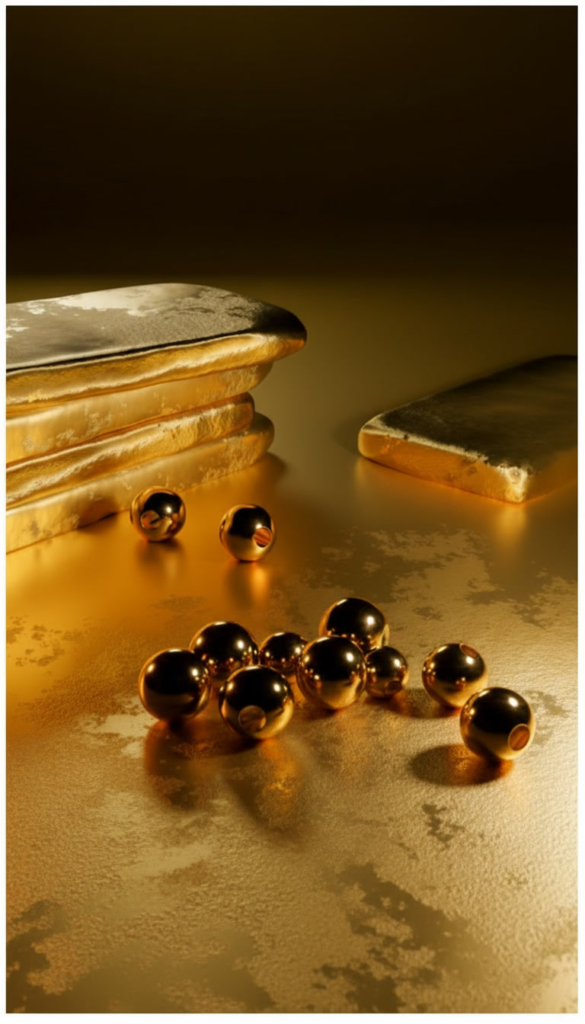
White gold is an alloy whose natural color depends on its composition. Some white-gold jewelry receives rhodium plating to create a brighter, whiter surface, while other pieces may be supplied without it.
Rhodium plating is a coating, not a surface texture. A white-gold piece can have a polished or textured surface and also be rhodium-plated. Because plating can wear with use, brands should specify whether the approved sample and production piece are intended to be rhodium-plated or unplated.
When documenting a white-gold design, separate the metal specification, the surface finish, and any plating requirement.
We use rhodium plating for bright white finishes on silver and white gold (see our manufacturing guide), alongside X-ray fluorescence (XRF) testing to verify metal purity and plating thickness.
What to Include in a Gold Jewelry Finish Specification
A clear finish specification helps align a brand’s design intent with its manufacturing discussion. Include these details in the technical pack:
- Metal: Specify the gold karat, color, and alloy requirements.
- Finish name and reference: State the preferred finish and include a photo, sample, or approved reference piece.
- Surface map: Mark which areas should receive the finish, including any polished borders or contrasting sections.
- Texture and direction: For brushed or patterned finishes, identify line direction, pattern scale, and desired texture depth where relevant.
- Plating: State whether plating is required, which surfaces it should cover, and the intended color or coating specification.
- Sample approval: Define what the team will assess, including reflectivity, texture, coverage, consistency, and the transition between finishes.
For new designs, review the finish on a physical sample whenever possible. A reference image communicates intent, but a sample helps the team assess how the treatment interacts with the actual shape, edges, and details.
For the bigger picture, see what jewelry brands should ask before launching a new collection.
From Finish Specification to Custom Gold Jewelry Manufacturing
A well-defined finish helps turn a design direction into a repeatable product specification. MJJ's bench team includes more than 700 artisan jewelers, stone setters, polishers, and engravers, and MJJ uses XRF testing throughout production to verify metal purity and plating thickness.
For brands developing a new solid-gold collection, these capabilities provide useful context when discussing surface treatments, sample approval, and production requirements.
Want to discuss your gold jewelry designs and finishing requirements with MJJ Brilliant?
Fill out the form below by providing as much detail as possible, and one of our experts will reach out to assess the scope of your unique project!
Contact
MJJ Brilliant
Frequently Asked Questions
What are the most common gold jewelry finishes?
Common options include high polish, matte, satin or brushed, sandblasted, and tumble finishes. Decorative treatments such as hammered or Florentine textures may also be considered, depending on the design and the manufacturer’s capabilities.
Does gold karat affect the appearance or wear of a finish?
Karat determines the proportion of gold in the alloy, not the finish itself. Alloy composition, design, surface treatment, and use all influence how a finished piece looks and wears.
What is the difference between matte and satin gold?
Matte gold has a subdued, low-reflection appearance. Satin gold generally has a soft sheen, while brushed finishes often show fine lines in a particular direction. The exact appearance depends on the treatment used.
Does white gold always need rhodium plating?
No. Some white gold is rhodium-plated for a brighter white appearance, while other pieces may be supplied without plating. Specify the intended treatment when approving a design and sample.
How should a jewelry brand specify a gold surface finish?
Name the finish, provide a visual reference, map the areas to be treated, and document the desired texture, direction, plating requirements, and sample-approval criteria. Confirm any specialized decorative treatment with the manufacturer before production. If you’re just getting started, we highly recommend checking out our blog article: How to Launch a Jewelry Brand Faster & Smarter.