

Ten years ago, a jewelry brand could get away with “ethically sourced” as a marketing line. Today, that is no longer enough. Retail partners ask for documentation, journalists trace supply chains beyond the finished product, and consumers increasingly want to know where a stone or metal came from before they decide whether to trust the brand behind it.
This is where direct sourcing changes the equation. At MJJ Brilliant, we approach sourcing as part of the manufacturing relationship itself, not as an opaque layer sitting somewhere behind it.
Combined with active RJC membership, long-standing supplier relationships, and a manufacturing model built for transparency, that gives brands stronger cost control and a more defensible sourcing story.
We verify materials through supplier documentation, certification records, and internal disclosure procedures that track provenance from source to finished order.
That process is supported by our Responsible Business Practices policy and Annual Responsible Sourcing and Human Rights Reporting, so brands are not relying on vague assurances—they are working from documented, reviewable evidence.
MJJ Brilliant holds active RJC (Responsible Jewellery Council) certification — Certificate No. 0000 4814, most recently certified July 2023–2026, with renewal ongoing — independently audited against the RJC Code of Practices.
The Real Cost of an Opaque Supply Chain
Most brands know materials are expensive. Fewer know exactly why. In a typical sourcing chain, materials may move through multiple layers before they ever reach the manufacturer: refinery or primary dealer, then distributor, then regional supplier, then factory. Every layer adds its own spread, and the brand pays the cumulative result without always seeing how the pricing was built.
That hidden cost matters more than it first appears. For example, if a brand spends $30,000 annually on materials and the sourcing path carries an added 8% to 12% spread through intermediaries, that can mean roughly $2,400 to $3,600 in avoidable cost before any production or shipping is even considered. As volume grows, that gap compounds.
For emerging brands, that kind of leakage can limit marketing budgets and product development. For larger brands, it can weaken pricing power and compress profitability across entire collections.
Opacity also creates specification risk. When metals and stones move through too many intermediaries, consistency becomes harder to maintain. Alloy purity can drift. Stone parcels may vary more than expected in color, cut, or size.
Matched sets become less reliable across repeat orders. These problems often surface later as rework, inconsistent finished goods, or customer complaints, but the root issue started upstream in sourcing.
Then there is the liability layer. A vague sourcing story is no longer commercially safe. Brands are increasingly judged not only on design and finish but also on whether they can substantiate their claims about provenance, ethical sourcing, and supply chain responsibility. If they cannot, the damage is not confined to the supplier. It lands on the brand itself.
What Direct Sourcing Actually Means at MJJ
Direct sourcing does not mean a brand has to become a commodities desk or manage a web of suppliers on its own. It means working with a manufacturer that already has established sourcing relationships and can bring those benefits into the production partnership.
At MJJ Brilliant, direct sourcing is built on long-term relationships with precious metal refiners and vetted diamond and gemstone suppliers. Instead of routing procurement through unnecessary distribution layers, we source only from vetted partners and manage material flow as part of the manufacturing process.
For the brand, that simplifies everything. Procurement, quality control, and production stay connected under one relationship rather than being fragmented across separate vendors.
The practical benefits are significant. First, there is greater pricing clarity. Metal pricing is passed through at market rate, not marked up; therefore, MJJ’s clients see the actual commodity cost rather than it disappearing into a chain of unexplained markups. In addition, specifications are applied with greater consistency.
When the same standards are enforced across repeat sourcing cycles, a reorder has a much better chance of matching the original production run in purity, cut, color, and general material performance.
Third, there is allocation advantage. Long-standing sourcing relationships improve access to consistent stone parcels, matched sets, and specialty materials when the market tightens.
That said, flexibility still matters. Some brands prefer to supply their own materials, whether for legacy reasons, proprietary sourcing relationships, or sustainability commitments. MJJ can manufacture to those specifications as well. Direct sourcing is an option and an advantage, not a lock-in.
RJC Certification and Why It Matters to Your Brand
If direct sourcing improves control, RJC certification provides the trust framework around that control.
The Responsible Jewellery Council is the jewelry industry’s best-known standards and certification body for responsible business practices across the supply chain. Its Code of Practices covers business ethics, human rights, labor rights, environmental management, and due diligence across sourcing and production.
For a manufacturer, active RJC membership signals that compliance is not self-declared or purely internal. It is reviewed against an external standard.
For brands, this matters because sourcing questions are now commercial questions. Buyers, press contacts, strategic retail partners, and even end consumers increasingly want more than broad assurance.
They want evidence that the supply chain sits inside a recognized accountability framework. When a manufacturer is RJC certified, the brand gains a more credible answer to those questions.
That is particularly important for smaller and mid-sized brands that do not have the resources to build a full independent compliance infrastructure from scratch. Working with an RJC-certified manufacturing partner gives them access to a documented, third-party-recognized sourcing foundation they can reference in retailer onboarding, wholesale conversations, press materials, and website sourcing pages.
MJJ Brilliant’s active RJC membership is publicly verifiable, which is exactly the point. A sourcing claim should not depend on trust alone; it should be something a buyer can confirm independently.
For diamonds specifically, responsible sourcing expectations also extend to conflict-related concerns. Brands increasingly need a clear answer when asked how stones are sourced and what safeguards govern the supply chain. A manufacturer with structured sourcing oversight helps make that answer clearer, more professional, and more defensible.
What We Source for Brand Partners
The strength of a sourcing program is not just in its ethics language. It is in whether it supports the materials real brands actually need.
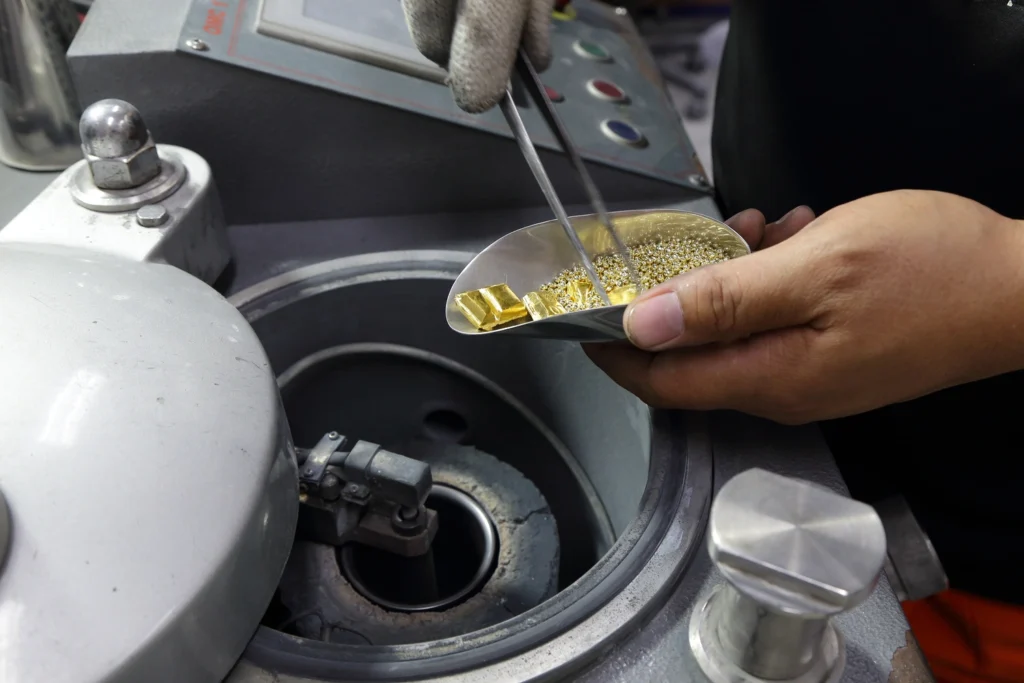
At MJJ Brilliant, we source across the core categories required for both fine and semi-fine production. On the metal side, that includes gold alloys in 10K, 14K, 18K, and 22K across yellow, white, and rose; sterling silver; platinum; and palladium.
Depending on the production method, those materials can be prepared in forms suited for casting, fabrication, or other manufacturing workflows. For brands with sustainability-forward positioning, recycled precious metals can also be integrated into the sourcing mix.
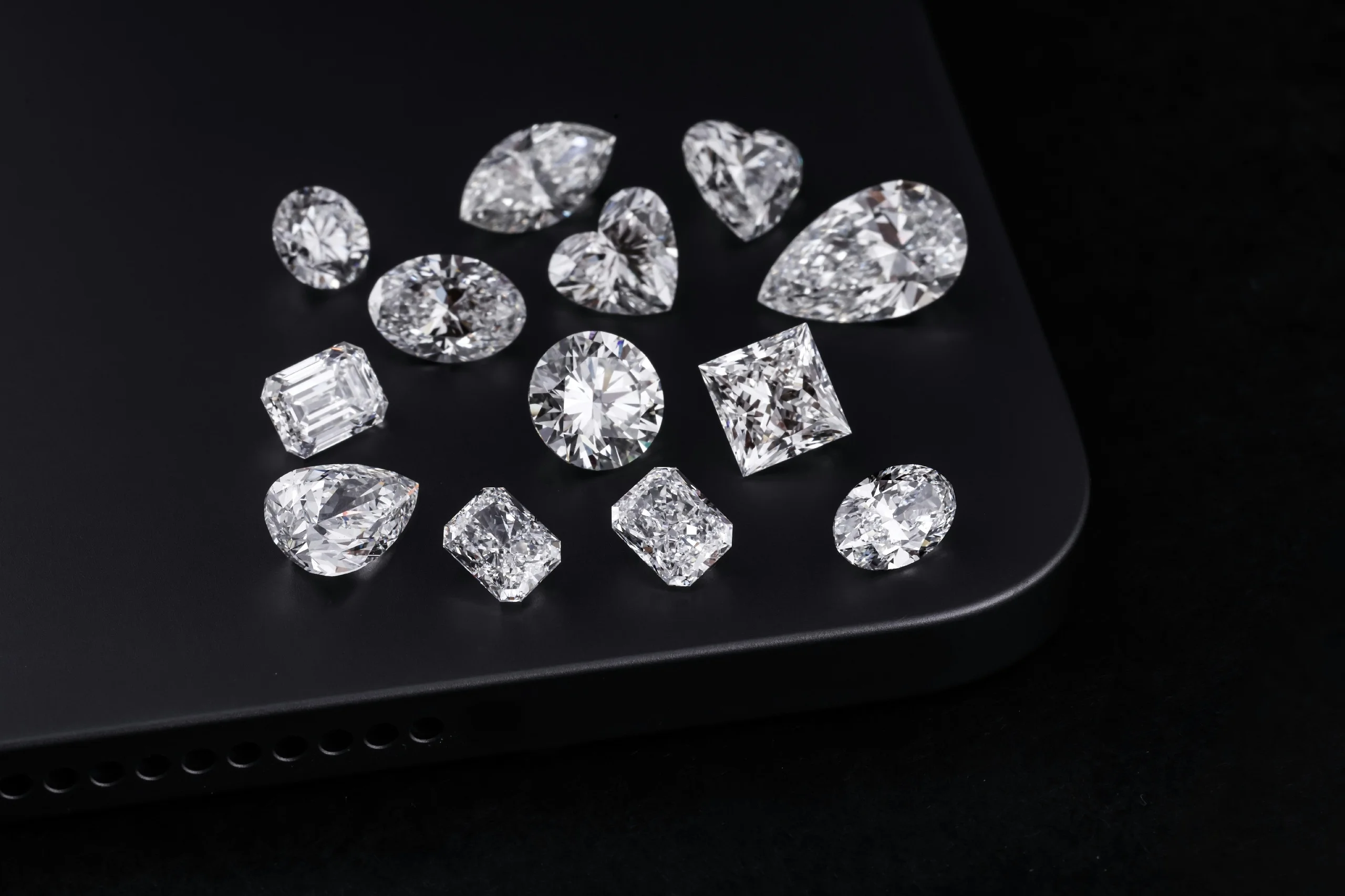
For diamonds, sourcing support spans both natural and lab-grown options. That includes round brilliants and major fancy shapes, along with matched parcel sourcing for styles that depend on consistency, such as pavé, channel, halo, and tennis constructions.
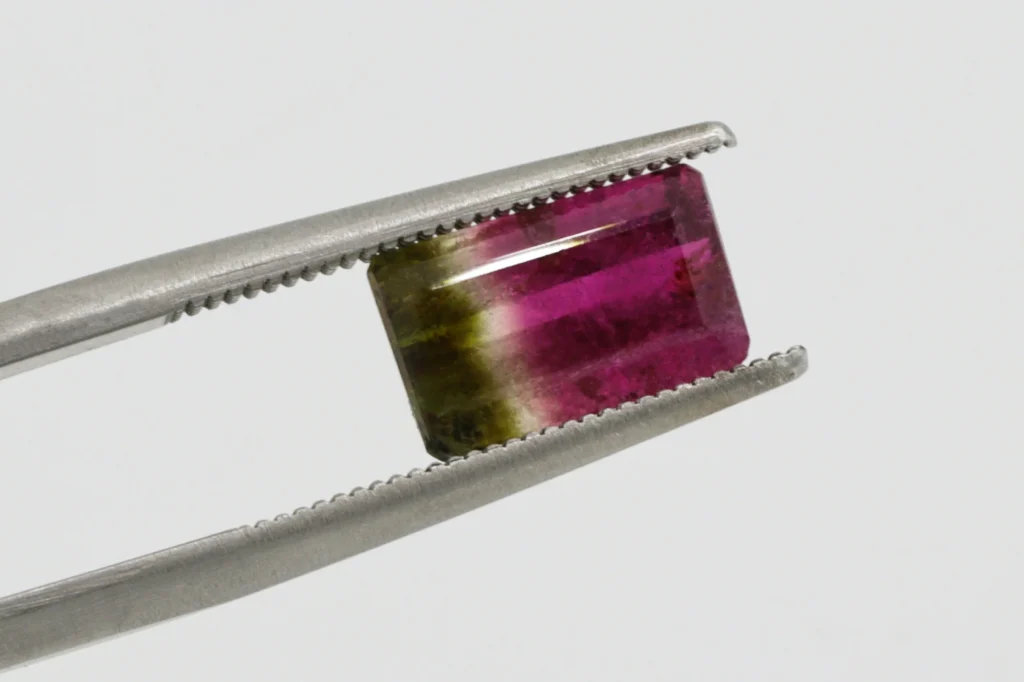
On the gemstone side, brands may source classic precious stones such as ruby, sapphire, and emerald, as well as a broader range of semi-precious options, depending on the collection.
No-minimum and made-to-order can support a wide range of order types, including prototype pieces, small launch quantities, and ongoing replenishment runs, subject to material availability and production capacity.
For prototypes and small launches, sourcing is often handled on a case-by-case basis so the brand can validate design, finish, and market response before committing to larger volumes. For replenishment orders, sourcing is typically streamlined around repeatable materials and approved specifications, which helps keep production consistent once a style is proven.
Why This Matters More Than Ever
Materials are not just inputs. They sit at the center of both your cost structure and your credibility.
If the sourcing path is opaque, the brand pays twice: once through avoidable margin loss and again through uncertainty when buyers or customers ask hard questions about provenance.
If the sourcing path is direct, transparent, and tied to a recognized accountability framework, the brand gains leverage on both fronts. Costs become more understandable. Specifications become more repeatable. Claims become easier to stand behind.
That is why we see sourcing as more than a procurement detail. It is part of the brand promise.
Contact us and our experts will get in touch to discuss your material requirements — tell us what metals, diamonds, or gemstones your designs call for, and we will outline what direct access looks like for your brand with relevant documentation, RJC-backed sourcing framework, and a transparent pricing outline.


