A wholesale jewelry supplier may be able to deliver your first order. The real question is whether they can support your hundredth reorder, a national retail rollout, or a holiday sales spike without sacrificing quality, visibility, or service.
Growth exposes weaknesses that were manageable at a smaller scale. A supplier selected solely for unit price or an attractive initial sample can become a bottleneck when orders increase, product lines expand, or new sales channels demand faster replenishment. Their performance ultimately affects your margins, inventory availability, customer experience, and brand reputation.
The goal is not simply to find a company that can make or sell jewelry. It is to identify the right partner for the business you are building—one with the appropriate combination of production, sourcing, flexibility, fulfillment, and operational support.
Before You Scale, Reassess the Supplier Behind Your Growth
A growing jewelry business needs more from its supplier than a competitive quote. As volume rises, you need reliable quality standards, transparent communication, consistent lead times, and a clear process for handling reorders, changes, and exceptions.
Start by assessing whether your current or prospective partner can support the next stage of growth—not just today’s order. Consider the complexity of your assortment, the materials you require, your projected volumes, and the channels you plan to serve. A DTC brand with made-to-order styles has different needs from a retailer carrying ready-to-ship inventory or a brand preparing for wholesale distribution.
The strongest supplier relationships are built around operational fit. That means evaluating the supplier type, quality systems, sourcing practices, production flexibility, fulfillment capabilities, and long-term ability to scale alongside your business.
Know the Difference: Supplier, Manufacturer, and Fulfillment Partner
Not every wholesale jewelry supplier provides the same level of support. Understanding the distinction helps you choose a relationship that matches your business model.
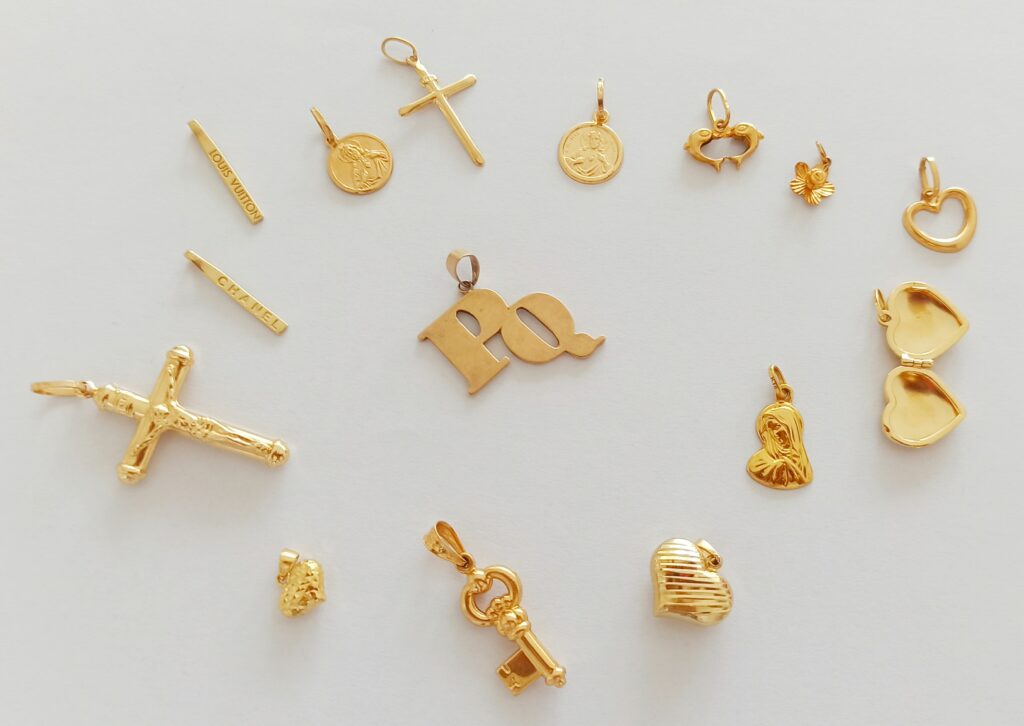
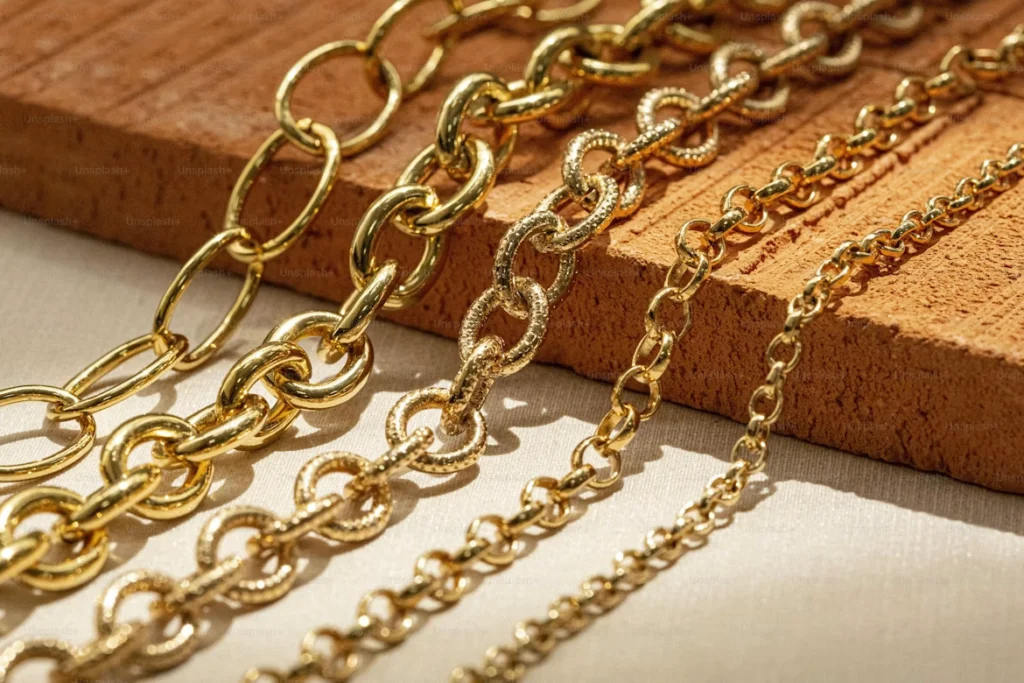
A wholesale jewelry supplier typically provides finished jewelry for resale, often from an existing catalog or established assortment. This can work well for retailers that need immediate inventory and do not require exclusive designs, custom specifications, or production control.
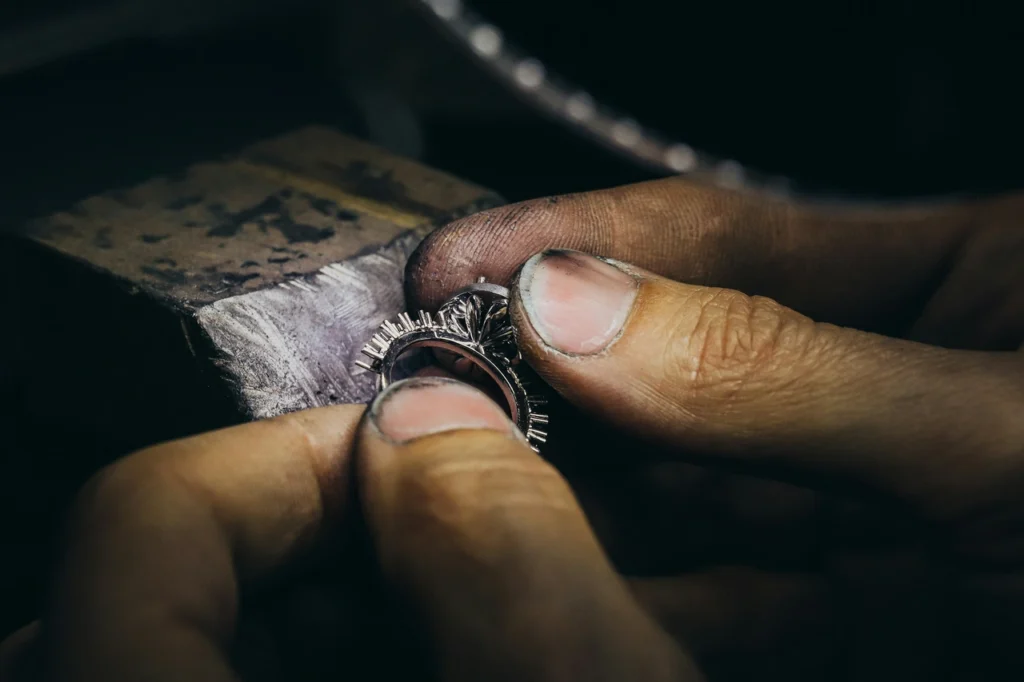
A wholesale jewelry manufacturer produces jewelry to a brand’s specifications. This may include private-label programs, repeatable collections, and custom wholesale jewelry. A full-service manufacturer can support design development, CAD/CAM, 3D printing, casting, stone setting, finishing, and final quality control. Explore the full custom jewelry manufacturing process.
A jewelry fulfillment partner manages what happens after production: receiving inventory, checking quality, packaging, routing, and shipping to customers or retail accounts. Some partners also support branded packaging, returns, dropshipping, and wholesale retail routing.
For a growing brand, integrated capabilities can reduce handoffs. When manufacturing, inventory, quality control, packaging, and shipping operate through a coordinated workflow, it is often easier to maintain visibility and protect the customer experience.
Start With Quality: Can They Deliver Consistency at Volume?
Quality should be the first evaluation criterion—not price. A supplier relationship fails quickly when production quality differs from the approved sample or varies from one reorder to the next.
For fine and semi-fine jewelry, evaluate metal purity and alloy consistency, stone quality and matching, setting security, plating, polish, clasp performance, sizing accuracy, and finishing. Ask to see representative samples across multiple product categories or technical requirements, not only one simple pendant or ring.
It is equally important to understand how the supplier records approved specifications and replicates them on future runs. Ask about final inspection, defect-resolution procedures, tolerance standards, and how production issues are documented and corrected.
The best supplier is not the one that delivers one beautiful sample. It is the one that can reproduce the approved standard reliably, whether you order 20 pieces or 20,000. MJJ’s team of 700+ master jewelers and full-service production capabilities are designed to support consistent craftsmanship from custom development through finished production.
Verify Sourcing Transparency and Ethical Standards
Brands are increasingly accountable for where their metals, diamonds, and gemstones originate. Retail partners, consumers, journalists, and compliance teams expect more than a general claim that materials are “ethically sourced.”
Ask prospective suppliers whether they can explain material sources, provide relevant specifications or documentation, describe how diamond and gemstone partners are vetted, and support responsible-sourcing requests from retailers or consumers. A credible answer should be documented and verifiable—not improvised.
Brilliant Jewelers / MJJ Inc. is an active member of the Responsible Jewellery Council (RJC). See how direct sourcing and RJC membership support confidence in your materials.
RJC membership is a meaningful trust signal for brands evaluating a jewelry sourcing partner because it reflects a commitment to responsible business practices across the jewelry supply chain, including ethics, human rights, labor, and environmental considerations.
For growing brands, working with an RJC member can provide a stronger foundation for retail onboarding, supplier due diligence, and brand communications. View Brilliant Jewelers / MJJ Inc.’s RJC profile.
Treat Flexibility as a Verification Point, Not a Promise
Minimum-order requirements vary by product, material, stone availability, tooling, production process, and complexity. Do not assume that “no MOQ” means every custom design can be produced in any quantity on any timeline.
Instead, ask whether minimums apply by SKU, metal color, stone, size, or process. Confirm whether the supplier supports samples and pilot runs, whether small replenishment orders are possible after the initial production run, and which processes require tooling or minimum quantities.
MJJ offers no-MOQ and made-to-order program options where the product and program structure support them. This can help brands test designs, reduce excess inventory, and replenish closer to actual demand. Learn how flexible, made-to-order production can reduce inventory risk.
Evaluate Geography, Lead Times, and Trade Exposure
Geography affects more than shipping distance. It can influence lead times, communication, freight risk, customs processes, and total landed cost.
For U.S. brands evaluating Mexico-based production, the relevant question is whether the finished goods qualify for preferential duty treatment under USMCA. Products made in Mexico do not automatically enter the United States duty-free; eligibility depends on the applicable product-specific rules of origin, classification, materials, and manufacturing process.
MJJ operates a large manufacturing facility in Mexico and can help brands evaluate whether a particular production program may qualify under USMCA. For eligible goods, this may support a more resilient North American supply-chain model; brands should confirm applicability with qualified customs and trade professionals. Understand how USMCA qualification may apply to Mexico-based jewelry production.
Confirm Fulfillment Before You Need It
Supply is only half the equation. A supplier may make excellent jewelry but still leave your team responsible for warehousing, packing, shipping, returns, and retail routing.
As your brand grows, determine whether the partner can support inventory intake and SKU-level tracking, pre-dispatch quality control, branded packaging, care cards, certificates, DTC fulfillment, high-value shipping, dropshipping, wholesale orders, retailer labels, documentation, returns triage, repair coordination, and restocking assessment.
MJJ can support nationwide fulfillment, distribution, and dropshipping alongside manufacturing, helping reduce the number of handoffs between production and delivery. Learn what a jewelry fulfillment partner should handle as your brand expands.
Use This Supplier Checklist
Before selecting a wholesale jewelry supplier, ask:
- Does the supplier offer catalog supply, manufacturing, fulfillment—or the combination we need?
- Can it demonstrate quality consistency through samples and documented processes?
- Are material-sourcing practices transparent, with recognized ethical credentials?
- Are minimums, pilot-run options, reorder terms, and limitations clear?
- Can it support our materials, technical requirements, and expected growth?
- Does it communicate lead times, pricing conditions, and constraints directly?
- Can it handle the packaging, fulfillment, distribution, or dropshipping model we need?
- Can it help us assess potential USMCA qualification for Mexico-based production?
Choose a Partner for the Brand You’re Building
The right wholesale jewelry supplier is not necessarily the lowest-cost option or the one with the largest catalog. It is the partner that helps protect quality, margin, trust, and operational control as your brand grows.
MJJ brings together full-service custom jewelry manufacturing, responsible-sourcing support through RJC membership, flexible production program options, Mexico-based manufacturing for programs that may qualify under USMCA, and integrated fulfillment and distribution capabilities.
Talk to MJJ about wholesale jewelry supply for your brand. Share your product requirements, projected volume, sourcing needs, and sales channels, and the team can help you evaluate the right production and fulfillment program.