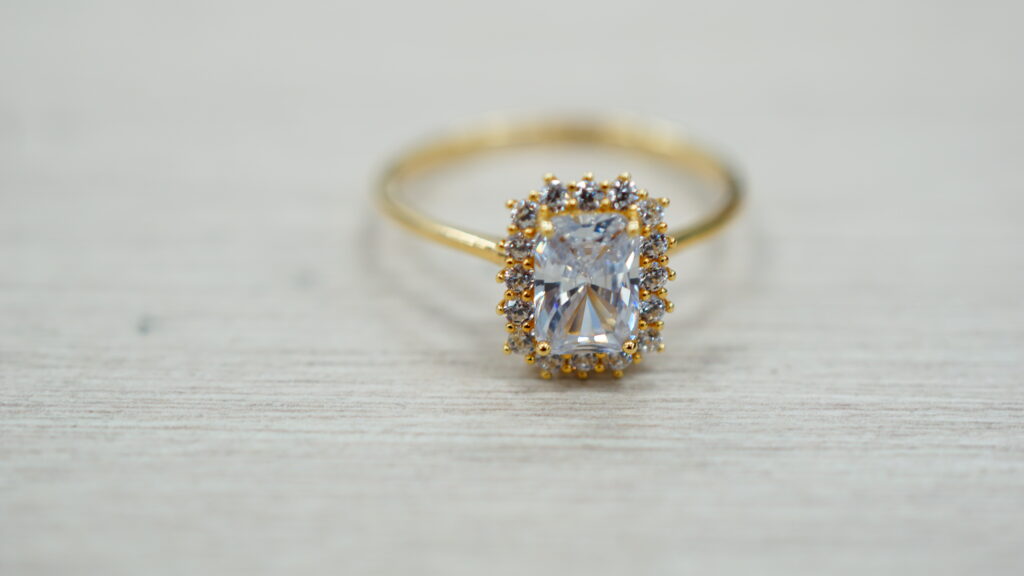
For a jewelry brand, casting is not simply the moment metal enters a mold. It is the point where design intent becomes a production asset—and where the quality of every downstream step begins to take shape.
Jewelry casting turns a wax pattern or other production-ready model into a metal component that can move into setting, finishing, polishing, plating, assembly, and final quality review. A cast piece is rarely the finished product. It is the production foundation for the finished piece.
The quality and readiness of the casting stage affect design-detail clarity, structural integrity, finishing requirements, stone-setting preparation, and consistency across a collection. For that reason, brands should evaluate jewelry casting services as part of a connected manufacturing workflow, not as an isolated metal-pouring transaction.
This guide follows the product path from CAD design to wax or CAM output, lost-wax casting, finishing and quality review, and future production planning. For a more detailed overview, explore MJJ’s complete custom jewelry manufacturing process.
Stage 1: Is the CAD Ready?
Casting readiness begins before a physical pattern exists. CAD gives brands and manufacturers a three-dimensional view of a piece’s dimensions, stone placement, metal thickness, proportions, and construction before physical production begins.
Before casting, a partner should review whether the design is appropriate for the intended metal, stone-setting requirements, product weight, wearability, fine details, structural elements, clasps, hinges, moving parts, and chain connections. The intended price position and need for repeat production should also be considered.
This review is not intended to limit a creative idea. It is designed to identify details that may need adjustment before they become expensive problems in a pattern, sample, or production run.
MJJ describes CAD as the digital-modeling phase where a jewelry piece is built with exact dimensions, stone placement, and metal thickness.
Stage 2: From CAD to Wax Pattern
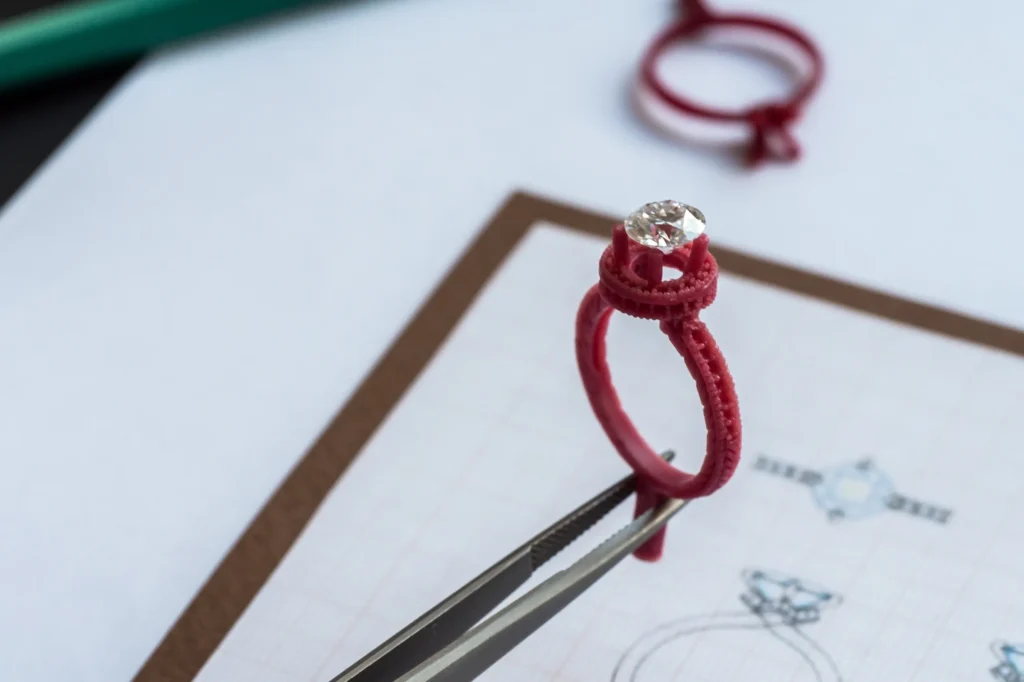
Once a design is approved for development, CAM—computer-aided manufacturing—translates the digital model into physical output used for prototyping, molding, or production. Depending on the program, this may involve a 3D-printed pattern, a CNC-milled wax master, or other production tooling.
The wax or pattern captures the geometry that the casting process will reproduce in metal. Casting reproduces what has been prepared, not an idealized version of it. This makes the quality of the approved model, pattern, and documentation important to both the first sample and future repeat production.
MJJ’s CAD/CAM guidance describes CAM as the stage that converts a digital model into physical output, including a 3D-printed prototype, CNC-milled wax master, or production tooling. Brands should ask how approved dimensions, stone placement, finish expectations, and sample standards will be retained for future orders.
Stage 3: How Lost-Wax Jewelry Casting Works
Lost-wax casting, also called investment casting, is a process used to replace a wax or castable pattern with metal inside an investment mold. It is widely used for detailed forms and repeatable jewelry production.
The process generally follows these stages:
- Prepare the pattern. An approved wax or castable pattern representing the jewelry design is prepared.
- Attach sprues. The pattern is connected to wax channels, called sprues, that create paths for wax to exit and molten metal to later fill the design cavity.
- Build the tree. Multiple patterns may be arranged together into a tree-like structure, depending on the production plan.
- Create the investment mold. The wax tree is placed in a flask and surrounded by investment material that hardens around the patterns.
- Remove the wax. During burnout, the wax or castable pattern is removed, leaving a negative cavity in the shape of the original design.
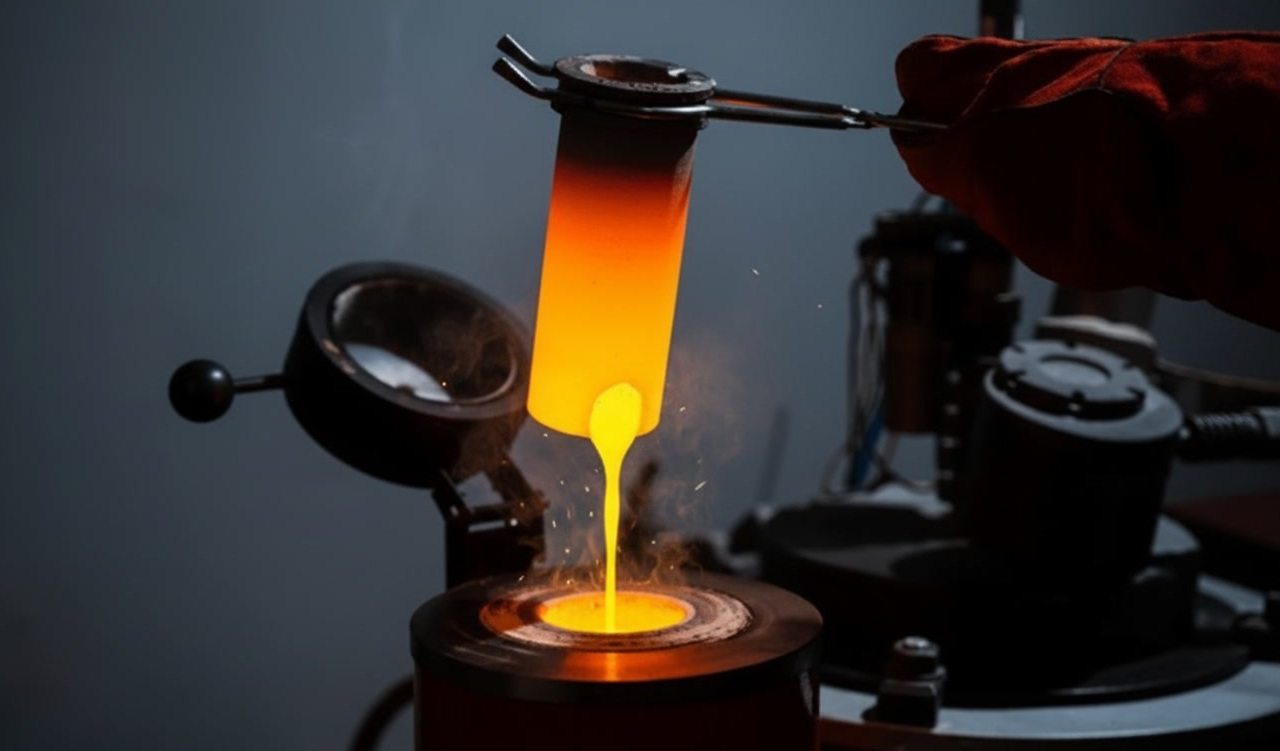
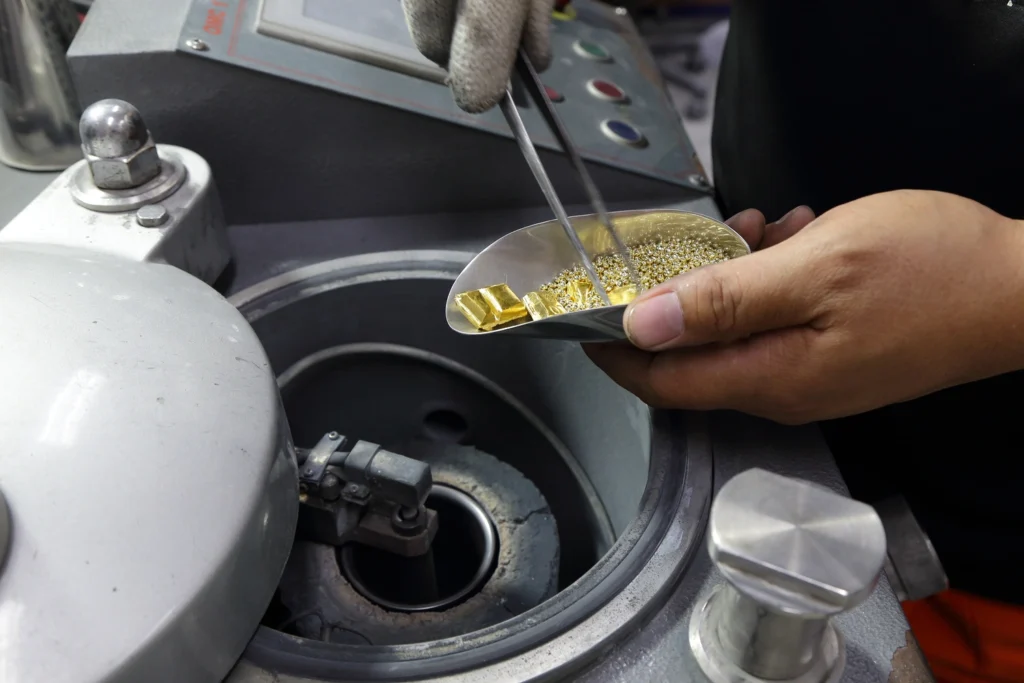
- Cast the metal. Molten metal is introduced into that cavity, creating the metal form of the pattern.
- Devest and separate. The investment material is removed, and the cast pieces are separated for later production steps.
MJJ identifies lost-wax, or investment, casting as part of its published custom jewelry manufacturing process. The exact casting approach, metal, pattern, equipment, and production conditions should be evaluated for the particular design. Avoid treating casting variables as universal across all jewelry categories.
Stage 4: Jewelry Casting Is Only the Beginning
After casting, a piece may require sprue removal, cleanup, assembly, pre-finishing, stone setting, engraving, plating, polishing, and final inspection.
The exact path depends on the product: a plain metal band, diamond pavé ring, gemstone pendant, chain bracelet, or mixed-material design will each have different requirements.
Brands should ask how casting moves into later manufacturing stages. Errors, unclear handoffs, or incomplete specifications can become visible in the final finish, stone security, product consistency, or SKU accuracy.
A casting partner should not only create the metal form. It should help ensure that the cast form is ready for the quality, finish, and production requirements of the final collection.
MJJ’s published manufacturing workflow describes casting followed by stone setting, additional details such as enamel, plating, or engraving, and final polishing.
Stage 5: Can the Program Scale?
Before selecting a lost-wax casting service, define the purpose of the program. Do you need a one-off prototype, a small test order, an initial collection launch, a recurring replenishment program, or a wholesale rollout?
The casting partner should understand the expected SKU range, metal and stone requirements, sales channels, and potential need for future variations, sizes, or reorders.
Ask how approved patterns, molds, CAD files, specifications, and sample standards are managed for future production.
No-MOQ or flexible production may be relevant for certain programs, but it should be evaluated against the specific design, material, casting method, tooling needs, and order structure.
Do not assume a particular minimum, capacity level, turnaround, or replenishment speed before discussing the collection in detail.
See how wholesale jewelry production moves from design through finished product.
What to Ask a Jewelry Casting Partner
Brands evaluating jewelry casting services should ask focused questions before committing to a production path.
Design and tolerances
- Can you review our CAD model, reference piece, or technical drawing before casting?
- What design features, fine details, wall thicknesses, stone seats, or structural elements require review?
- How will approved dimensions, product weight, stone placement, and finish expectations be documented?
Patterns and production assets
- Will the program use a 3D-printed pattern, wax master, mold, or another production method?
- Who owns CAD files, masters, molds, and other production assets?
- How are approved samples and specifications retained for repeat orders?
Materials and production
- Which metal types, colors, alloys, and finishes are suitable for the collection?
- Can the manufacturer support responsible sourcing for metals, gemstones, chains, clasps, and components?
- Which steps are included after casting, such as setting, polishing, plating, or assembly?
- What is the process for approving samples, documenting revisions, and resolving issues before wider production?
Scale and logistics
- Can the program be evaluated against our expected launch quantity and future reorder needs?
- What information is needed to assess packaging, fulfillment, or retail-readiness requirements?
Understand how direct material sourcing supports jewelry production.
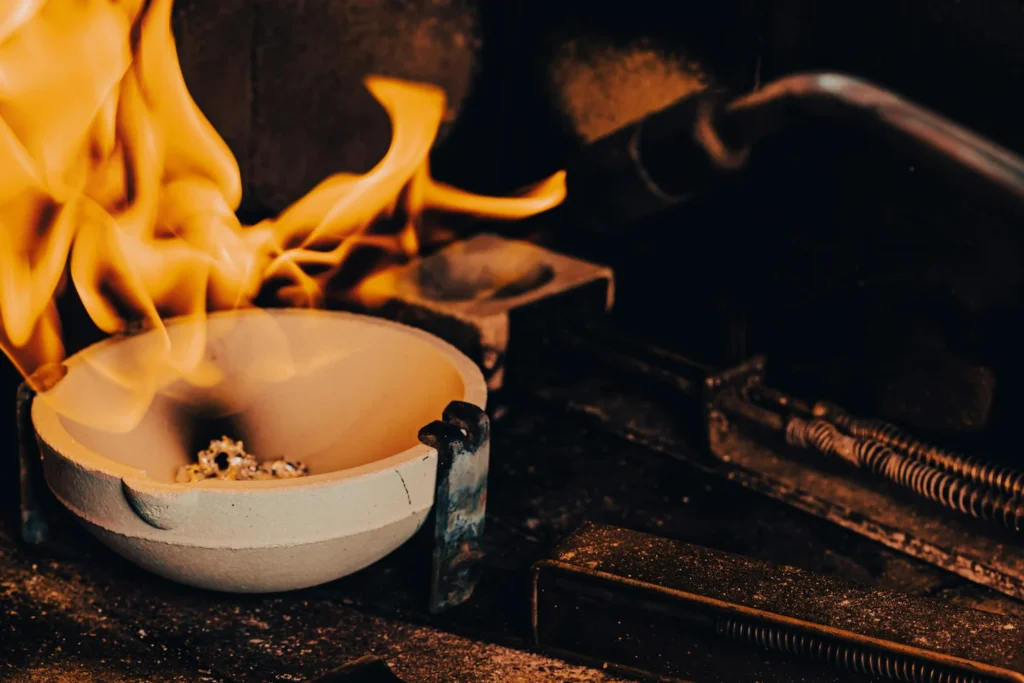
Jewelry Casting in New York: Keep it home
For brands searching for jewelry casting in New York City, proximity may be useful for design meetings, collection development, sample feedback, brand communication, and relationship management. MJJ is based in Long Island City, New York, and its public materials describe work with U.S. and global retailers.
Location should not be the only selection criterion, however. Evaluate a partner’s CAD and design-development support, lost-wax casting capability, metal and material options, sample and quality-review process, production planning, and post-casting finishing support.
Brands should also confirm where their specific production program will occur. MJJ’s New York presence should not be read as a claim that every casting step takes place there. Discuss the applicable design-development, casting, production, and logistics requirements directly with the team.
Learn more about MJJ’s jewelry manufacturing capabilities.
Choose Casting Services for the Full Collection
A strong jewelry casting program connects design review, a production-ready pattern, lost-wax casting, post-cast finishing, inspection, and future production planning. The right partner should help a brand evaluate that full path rather than simply accept a file and pour metal.
MJJ can be evaluated as a consultative B2B manufacturing partner for brands developing custom jewelry, collection samples, repeat production, and broader production programs.
Talk to MJJ about jewelry casting services for your next collection. If you are ready to start, fill in the fields below and share all your product requirements and production goals to evaluate the right lost-wax casting and manufacturing path for your project.
Contact