

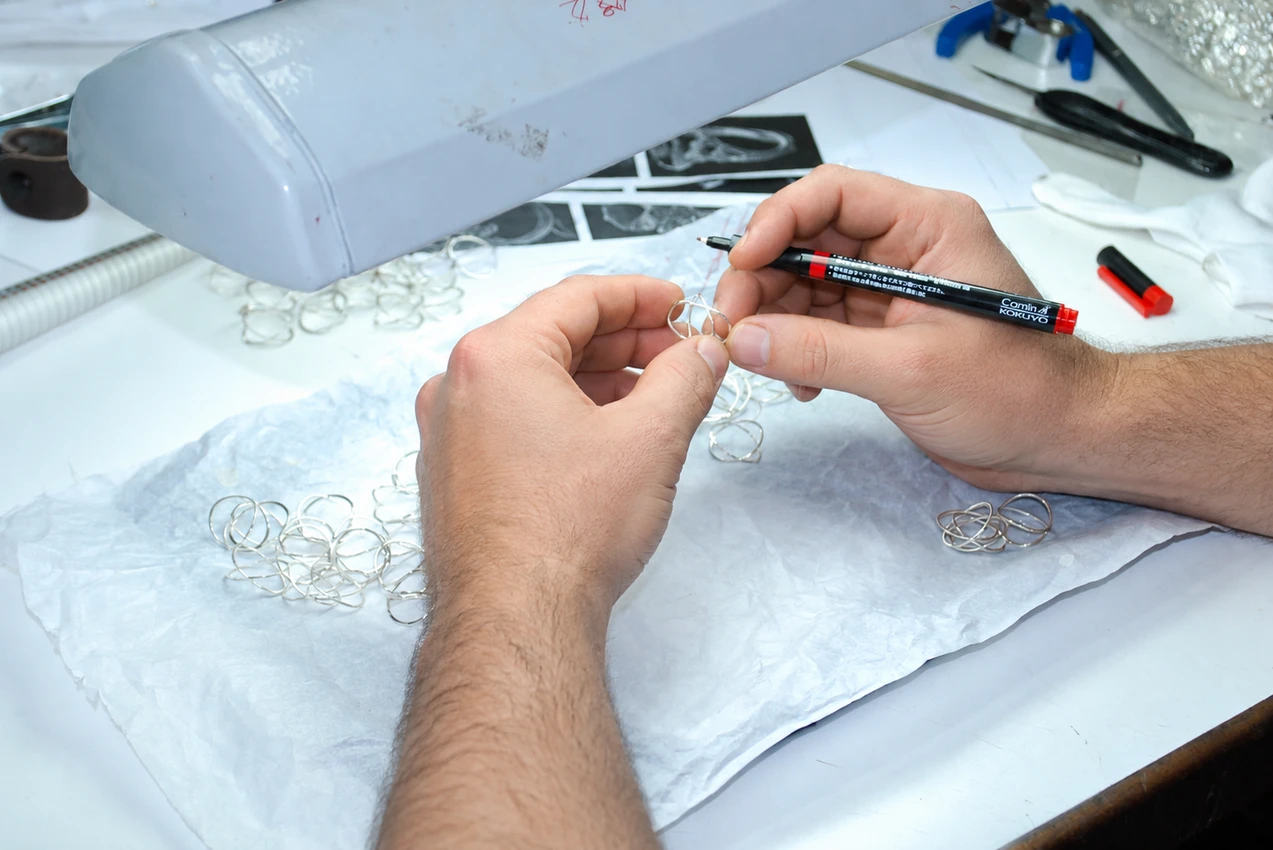
A jewelry design may look perfect in a rendering but reveal issues when translated into a physical piece. A setting might sit too high, a clasp might be difficult to operate, or a surface finish might differ from the approved reference.
Jewelry quality control helps brands verify that a piece meets agreed specifications before authorizing production. Reviewing the right sample, defining acceptable quality, and documenting discrepancies helps brands and manufacturers align expectations before production begins.
This guide explains what to check, what evidence to request, and when to approve or request revisions. The appropriate checks depend on the product, materials, construction, and intended use.
What Is Jewelry Quality Control?
Jewelry quality control is the process of checking whether a piece meets agreed requirements for materials, dimensions, construction, stone setting, finishing, and functionality.
Checks can take place during development, sample approval, manufacturing, and final inspection.
Quality control, or simply ‘QC’ focuses on checking products against defined requirements, while quality assurance encompasses broader processes intended to prevent problems and support consistency.
For brands outsourcing production, the first step is establishing what an acceptable piece looks like and how compliance with the agreed specifications will be assessed.
Why Is Quality Control Important Before Approving Production?
Sample approval lets brands identify discrepancies before they are repeated across a production run. It also helps clarify requirements, reduce avoidable revision cycles, and protect the intended appearance and functionality of a design.
For example, a ring rendering may show a low-profile setting, but the physical sample sits higher than expected. Resolving that difference before production establishes a clearer reference for the finished pieces.
What Should Jewelry Brands Check Before Approving a Sample?
For each check, compare the sample with the approved specifications, document discrepancies, and agree on whether revision or further assessment is required.
1. Materials and Metal Specifications
Check: Metal type, karat, alloy, color, plating, and any components or substitutions.
Evidence: Compare the sample with the written material specification. Ask what documentation or testing is available when material composition or plating must be verified. Appearance alone cannot confirm alloy composition.
Decision: Approve when the materials match the agreed requirements. Request clarification or verification if a material specification is uncertain or an unapproved substitution has occurred.
2. Dimensions, Proportions, and Weight
Check: Overall dimensions, ring size, thickness, component proportions, setting height, and weight where relevant.
Evidence: Compare measurements with the technical drawing or product specification. Identify critical dimensions and agree with the manufacturer on acceptable variation for the specific design.
Decision: Approve when the sample meets the agreed requirements. Request revision if a discrepancy affects fit, appearance, or functionality. Do not assume universal dimensional tolerances apply to every piece.
3. Stone Placement and Security
Check: Stone type, size, shape, position, spacing, alignment, visible damage, and setting details.
Evidence: Compare the stones with the written specifications, including their stated identity, origin where specified (natural or laboratory-grown), and any disclosed treatments. Request supporting documentation or specialist verification where needed.
Design comparisons and photographs alone cannot confirm these properties. Separately, assess the setting visually for damage or irregularities, and arrange appropriate hands-on checks or specialist assessment where stone security is uncertain.
Not every stone requires an individual lab report; the verification needed depends on the product and the agreed requirements.
Decision: Approve when the setting matches the specifications and required security checks have been addressed. Request further assessment if a stone appears loose, damaged, or incorrectly positioned.
4. Construction, Joints, and Moving Components
Check: Clasps, hinges, links, soldered joints, bezels, and other structural components relevant to the design.
Evidence: Identify which components require functional checks and how they should operate under normal intended use. A clasp may look correct but still be difficult to open or close.
Decision: Approve when the relevant components function as specified. Request revision if a closure, joint, or moving part does not perform as intended.
5. Surface Finish and Appearance
Check: Polishing, brushing, texture, plating, surface marks, edges, and transitions between finishes.
Evidence: Compare the piece with an approved sample or visual reference. Specify which surfaces receive each finish rather than relying on vague descriptions alone. See MJJ Brilliant's guide to gold jewelry finishes.
Decision: Approve when the appearance matches the agreed reference. Request revision if visible defects or finish inconsistencies conflict with the specification. Visual inspection cannot independently verify every property of a coating or surface treatment.
6. Comfort, Wearability, and Function
Check: Edges, fit, movement, closure operation, weight, and suitability for the intended use.
Evidence: Identify product-specific requirements. For example, a ring may need a review of its inner profile, while a bracelet may require attention to articulation and closure operation.
Decision: Approve when the piece meets the agreed functional requirements. Request revision if a design feature affects comfort or usability. A sample review alone does not establish long-term durability.
7. Branding, Engravings, and Small Details
Check: Logo placement, engraving text and orientation, decorative details, and required markings.
Evidence: Compare the sample with approved artwork and marking instructions. Verify applicable hallmarking requirements separately where necessary, as these can vary by jurisdiction, product, and material.
Decision: Approve when the details match the approved artwork and relevant requirements have been addressed. Request revision if text, placement, or markings are incorrect.
8. Overall Consistency With the Approved Design
Check: Shape, proportions, component placement, stones, metal, finish, branding, and functionality.
Evidence: Review the sample against the approved technical drawings, written specifications, and reference images together. Confirm that both parties are using the same design version.
Decision: Approve when the sample meets the agreed requirements and any remaining variations have been explicitly accepted. Request revision when a material discrepancy remains unresolved.
Appearance Prototype vs. Production-Representative Sample
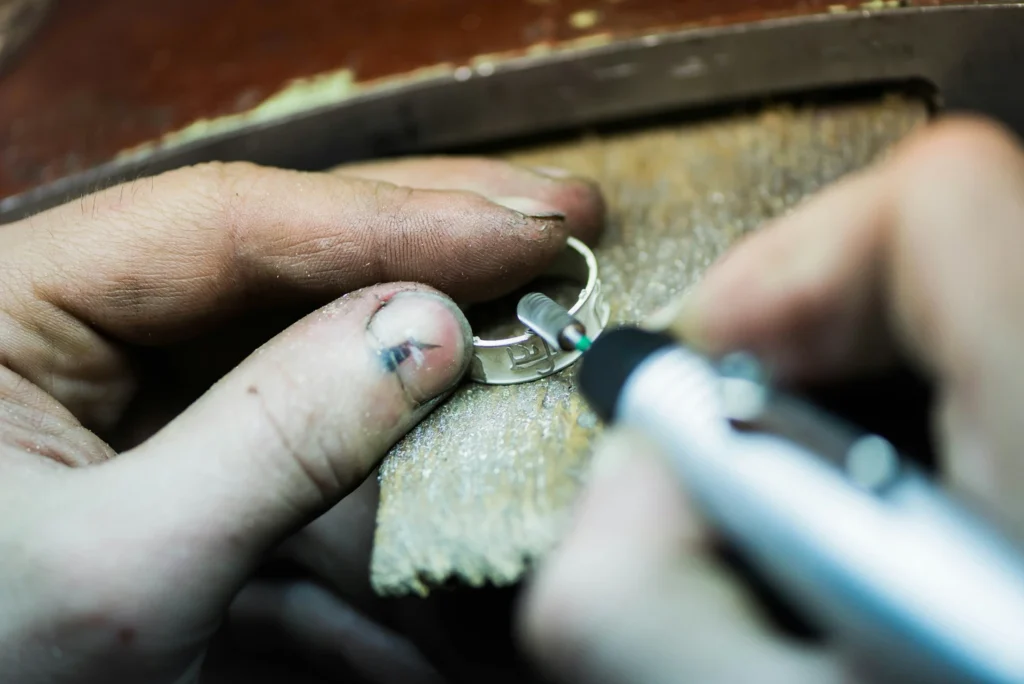
An appearance prototype primarily helps evaluate visual elements such as silhouette, proportions, and design direction. Depending on how it was made, it may not use the final materials, construction methods, or finishing process.
A production-representative sample is intended to reflect the specified product and relevant manufacturing methods more closely. It is generally the more appropriate reference for reviewing materials, construction, settings, finish, and functionality.
Before reviewing a sample, clarify its purpose, version, materials, and any differences from the intended production piece. Approving an appearance prototype should not automatically approve production details that the prototype does not represent.
Sample approval does not replace production inspections. A sample represents one piece at a particular stage; it does not establish that every subsequent piece will be identical. Agree on appropriate production inspection arrangements and responsibilities with the manufacturer.
What Counts as a Jewelry Manufacturing Defect?
A manufacturing defect is a discrepancy that prevents a piece from meeting its agreed specifications or acceptance criteria. Not every variation is automatically a defect.
Examples include an incorrectly positioned stone, a non-functioning clasp, a surface mark that conflicts with the agreed finish, an incorrect dimension, an unapproved material substitution, or inaccurate engraving.
Brands can discuss three broad categories with their manufacturer:
| Category | Typical interpretation | Suggested response |
| Critical | Affects safety, essential function, or required material compliance | Hold approval pending assessment |
| Major | Materially affects design, fit, function, or saleability | Request clarification or revision |
| Minor | Cosmetic variation whose acceptability depends on the specification | Assess against agreed criteria and document the decision |
This is a suggested framework, not a universal industry standard. Acceptance criteria should be agreed for the specific product.
How Should Brands Document Sample Feedback and Approval?
A useful approval record identifies the sample, the requirements reviewed, outstanding issues, and the decision.
- Record the style number, sample version, date, and purpose.
- Compare the sample with approved drawings and specifications.
- Photograph discrepancies and identify their exact locations.
- Separate required corrections from optional design preferences.
- Record whether each item is approved, requires revision, or needs further assessment.
- Confirm the final sample version and approval status in writing.
Example: Sample Approval Record
Disclaimer: This is just an illustrative example—not an MJJ-specific workflow.
| Field | Example |
| Style | R-104 gold ring |
| Sample | Prototype V2 |
| Purpose | Appearance review |
| Check | Surface finish |
| Specification | Satin band, polished setting |
| Observation | Band is more reflective than the approved reference |
| Evidence | Comparison photographs |
| Decision | Revision requested |
| Status | Awaiting revised sample |
Documenting Sample Approval and Production Release
The approval record should identify the sample version, the applicable drawing and specification revisions, the authorized approver, and the approval date. It should distinguish the decision for each individual check from the overall project status: approved for production, on hold, or revision required.
An appearance-review sample may be approved for visual direction while still requiring further development or verification.
Appearance-only approval does not authorize production. Record production release separately and grant it only after you review the applicable production requirements and the authorized approver confirms the release status.
Any outstanding requirements or conditions should be documented clearly. Do not imply that the entire sample is approved while material discrepancies remain unresolved.
What Should You Ask a Jewelry Manufacturer About Quality Control?
Use these questions to clarify the supplier's actual processes and responsibilities:
- How are approved designs and specifications documented?
- How are sample revisions communicated and confirmed?
- Which product characteristics should be defined as critical?
- How are material specifications verified where necessary?
- Which functional or specialist checks suit this design?
- How are discrepancies identified and communicated?
- How are samples that do not meet specifications assessed?
- How is the approved reference identified for production?
- Which acceptance criteria and inspection responsibilities should be agreed before production?
The objective is to understand the manufacturer's actual process rather than assume every supplier follows the same procedures. For a broader insight, see MJJ's Ultimate Custom Jewelry Manufacturing Guide.
Final Jewelry Quality-Control Checklist Before Production Approval
- Materials match the approved specifications.
- Critical dimensions and proportions have been checked.
- Stone placement and setting details have been reviewed.
- Relevant construction and functional components have been assessed.
- Surface finish matches the agreed reference.
- Branding, engravings, and required markings have been reviewed.
- Necessary documentation or specialist assessments have been addressed.
- The approved sample version and status are recorded.
- Production inspection arrangements and responsibilities are clear.
Important Considerations Before Production Approval
Not every discrepancy can be resolved through sample approval alone. Explicit acceptance should be limited to permissible deviations within the agreed product requirements.
Applicable safety and legal requirements must still be met, and material or stone identity must be verified where required. Neither compliance obligations nor unverified material or stone identity can be waived simply by approving a sample.
Adapt the approval process to the product, materials, construction, and project requirements. Adapt this checklist to the product, materials, construction, and project agreement.
Build Quality Expectations Into Your Jewelry Manufacturing Process
Effective jewelry quality control starts with clear specifications and a shared understanding of acceptable quality. Reviewing the appropriate sample, documenting discrepancies, and recording decisions gives brands and manufacturers a clearer basis for communication.
Sample approval is one part of the process—not a substitute for agreed production inspections or any specialist testing the product requires.
Planning a new collection or custom jewelry manufacturing project? Contact MJJ Brilliant to discuss your designs, specifications, and production requirements.


