The question every brand asks before scaling production is the same: will the 500th piece look exactly like the first?
With setting-intensive jewelry, pavé halos, channel-set bands, invisible-set pendants, that question should keep buyers up at night. Stone setting is where craftsmanship either proves itself or quietly falls apart.
We understand why brands are skeptical. Too often, “scale” is treated as a synonym for compromise.
A style looks sharp in the development sample, then drifts in production: prongs sit unevenly, pavé rows lose rhythm, channels stop reading clean, and stone security becomes inconsistent. That is not a volume problem. It is a systems problem.
At MJJ Brilliant, we approach diamond setting jewelry manufacturing differently. We support setting-intensive programs through a bench organization of 700+ master jewelers and production capacity measured in millions of pieces annually, but scale only works because it is governed by alignment, specialization, and documented quality controls.
Before we begin production, we focus on understanding and formalizing the brand’s own setting standards so they can be repeated consistently over time. That is how we make craftsmanship scalable rather than variable.
The Five Core Setting Techniques at Scale
Every setting style carries its own risks in production. Our job is not just to execute the technique, but to control the exact points where that technique can fail.
Prong Setting
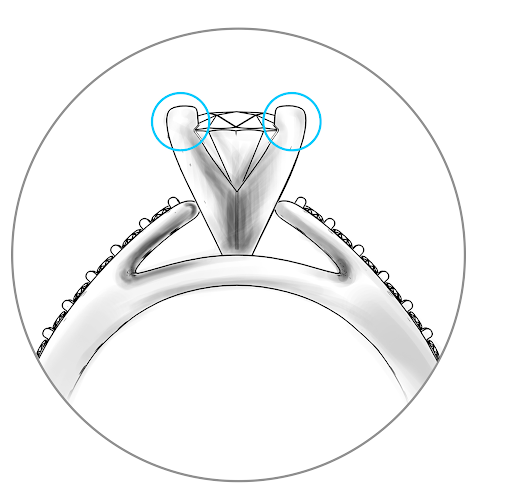
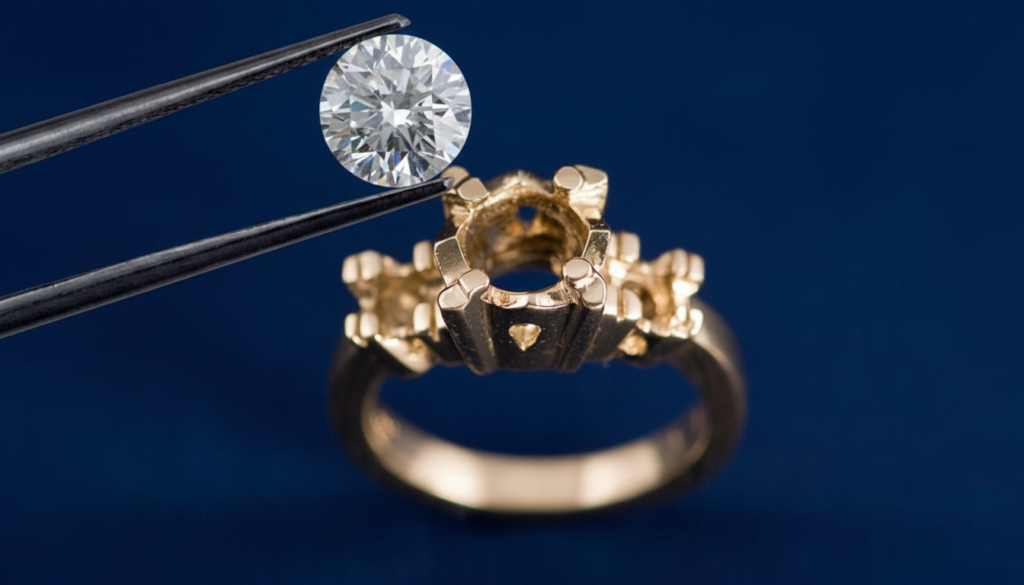
Prong setting remains the foundation for solitaires, halos, and multi-stone designs. Its performance depends on prong angle, height, tip finish, and how pressure is applied to secure the stone.
At scale, the most common failures are easy to spot: prongs sitting at uneven heights, inconsistent tip rounding, or too much pressure on one side of the stone.
We control for that by standardizing prong geometry from the CAD stage, then approving the first completed piece at the setter level before the run progresses.
In-line inspections under magnification confirm that the piece matches the approved geometry before it moves into polishing or final QC.
Pavé Setting
Pavé is one of the most demanding categories in jewelry stone setting manufacturing. The visual effect only works when bead height, spacing, and metal removal are all highly consistent. If one section runs slightly heavier or looser than the next, the surface loses its continuity under light.
That is why pavé is treated as a dedicated specialization within our bench team. Setters who focus on pavé build the repetitive control and muscle memory required for micro-consistency across bands, halos, and curved surfaces.
We do not treat pavé as generic benchwork; we assign it to specialists whose entire workflow is tuned around uniformity.
Channel Setting
Channel setting depends on parallel walls, consistent seat depth, and controlled pressure across the line of stones. When it fails, stones rock, walls fatigue, or the top line starts to wave rather than read clean and straight.
Our approach begins before hand setting. Channel foundations are prepared from CAD-based dimensions, so seat depths and wall spacing start from a controlled baseline.
Setters then verify the batch against calibrated reference tools before proceeding. This is especially important in bracelets and bands, where even slight deviation becomes highly visible when repeated across many stones.
Bezel Setting
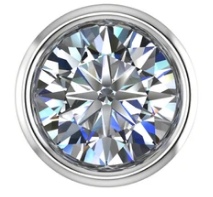
The bezel setting looks simple, but it is unforgiving. The metal rim must contact the stone evenly around the perimeter while maintaining a consistent wall thickness. If one side is heavier than the other, the finished piece looks off-balance even if the stone is technically secure.
We build bezel-forming around CAD-derived geometry so wall thickness begins consistently. After seating, each piece is inspected under magnification to confirm uniform girdle contact and balanced metal coverage. The objective is not merely security, but visual symmetry.
Invisible Setting
Invisible setting is the least forgiving of all. The technique relies on a shared structural grid, tightly cut grooves, and extremely narrow tolerances. One undersized groove or slightly misaligned panel can compromise the entire visual effect and long-term durability.
For that reason, the invisible setting is handled by a dedicated specialist sub-team. These pieces move through a separate QC gate before advancing. An invisible setting cannot be treated as “just another bench operation.” It requires a different level of technical control from the start.
The Alignment Phase: Replicating Your Craftsmanship, Not Replacing It
This is where most manufacturers fall short. Two brands can both ask for pavé, bezel, or prong setting and still mean very different things.
One brand may prefer tighter prongs with a sharper claw finish. Another may favor a softer bead profile in pavé.
A third may define bezel wall thickness as part of its visual identity. If a manufacturer ignores those nuances and simply “sets the way it always sets,” the result may still be beautiful, but it will not necessarily look like your product.
That is why our process begins with alignment, not volume. Before full production starts, we work through a structured testing and technique-mastering phase designed to map your existing standards into our production system.
Depending on the program, that can include reviewing physical samples, studying detailed photography and measurements, analyzing how your current production handles each setting type, and building a first-run test batch for side-by-side comparison against your standard.
What gets documented is highly specific. We capture items such as:
- Prong geometry and tip finish style
- Pavé bead height and spacing preference
- Seat depth tolerances by stone size and shape
- Bezel wall thickness targets
- Matched-stone criteria for size, cut consistency, and overall visual fit
The result is a brand-specific setting specification sheet that becomes the working standard for every production run. That specification does more than guide development. It becomes the permanent reference that keeps the 500th piece aligned with the first.
The Quality Controls That Govern Scale
Alignment only matters if it is reinforced during production. In our setting operation, quality is not a one-time calibration; it is a controlled sequence of approvals and inspections.
We begin with first-piece approval. The first completed piece in a new run is pulled for full inspection before the lot continues. If it does not match the approved setting specification, the run pauses until the issue is corrected.
We then apply in-line sampling. At defined intervals, pieces are pulled for magnification checks against the documented standard. Depending on the setting style, that review can include bead height, prong finish, seat consistency, stone alignment, and surface flow.
At the end of the process, additional inspection may occur, including stone-tightness testing, visual review under magnification, and an integrity check on the finished surface.
We also maintain setter-level traceability. Batches are tied back to the setter or team responsible for the work. If QC identifies a pattern, we can trace it to the source and correct it through retraining or process adjustment rather than treating it as a random defect.
Technology supports this system, but it does not replace the jeweler. CNC-guided preparation helps control setting foundations.
Laser welders assist with precise prong repair where needed. Calibrated magnification tools standardize inspection across workstations. But the final standard still depends on trained human judgment.
Why Scale and Craftsmanship Are Not a Trade-Off
Many brands assume high-volume manufacturing inevitably dilutes quality because that has been their experience. What actually failed in those situations was not scale itself, but process discipline.
When a setting operation runs without alignment, documented tolerances, and continuous QC, quality becomes unpredictable. When those elements are in place, volume does not weaken craftsmanship. It stabilizes it.
That is the real advantage of scale when it is built correctly. It allows for dedicated technique teams, better tools, stronger training infrastructure, and more rigorous inspection systems than most in-house benches can justify on their own.
In many cases, that means a brand can preserve its standard more consistently in scaled production than it could through a smaller, less structured bench environment.
Our goal in the alignment phase is not simply to approximate your current standard. It is to lock it in and hold it, every piece, every order, at any volume.
Closing
Precise diamond setting at a custom jewelry manufacturing scale is not just about choosing between craftsmanship and production volume. It is about building a system that protects the brand’s visual standards while giving the operation enough structure to repeat them reliably.
That is the difference between a piece that looks right once and a program that holds together across every order.
Feel free to send over your particular setting specs, CADs, sample photos, or current production samples for review. Use the form below, and let’s create something solidly crafted and brilliant together!
Contact